Bay Area Semiconductor Marketing Agency: Why Your Chip Wins
A semiconductor marketing agency in the Bay Area helps chip startups answer the one question every investor and buyer asks: why will your chip win? The best answer is rarely another benchmark slide. It is a clear picture of what your chip does differently, shown in a way non-engineers can follow.
In practice, that means three things: animating what happens inside the chip, turning founder conference talks into short clips, and building recruiting content that competes with Big Tech for engineers. This guide is for founders who have raised, or are about to, and need their story to keep up.
Chip Startups Are Raising Record Money, and Facing Record Scrutiny
Chip startups are raising more money than almost any other deep tech category. According to Crunchbase News, investors put around $10.7 billion into semiconductor startups in the first five months of 2026, putting the year on track to beat 2025.
Much of that money landed in the Bay Area:
- Etched raised $500 million at a $5 billion valuation.
- MatX closed a $500 million Series B led by Jane Street and Situational Awareness.
- San Jose's Ayar Labs raised a $500 million Series E, with AMD Ventures and Nvidia backing its optical interconnects.
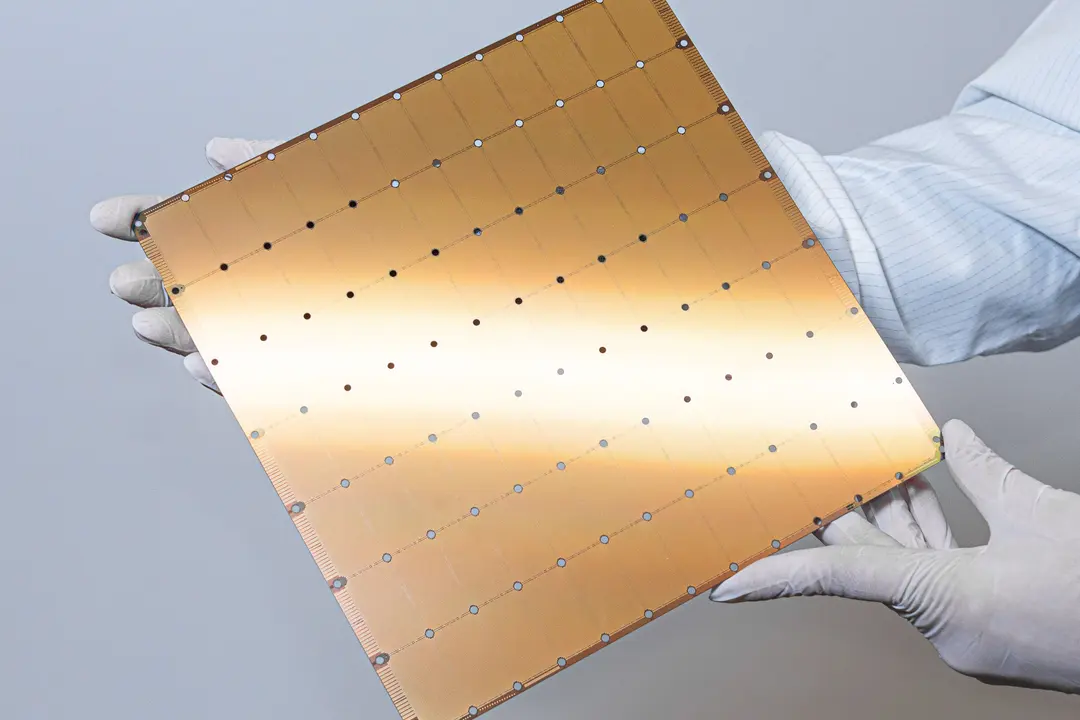
- Sunnyvale's Cerebras went public in May and raised $5.5 billion, according to TechCrunch.
The Cerebras story also shows the risk. Its shares closed at $311 on day one, well above the $185 IPO price. Within weeks, they had fallen about a third from that first close.
Cerebras was still worth around $50 billion at that point, so this was not a failure. It was a reminder that public investors reprice quickly when a story gets harder to believe.
Big rounds bring big expectations, and the market punishes stories that are hard to follow. In a crowded, capital-heavy category, the chip that wins attention is often the one people can understand fastest.
What Does a Semiconductor Marketing Agency Actually Do?
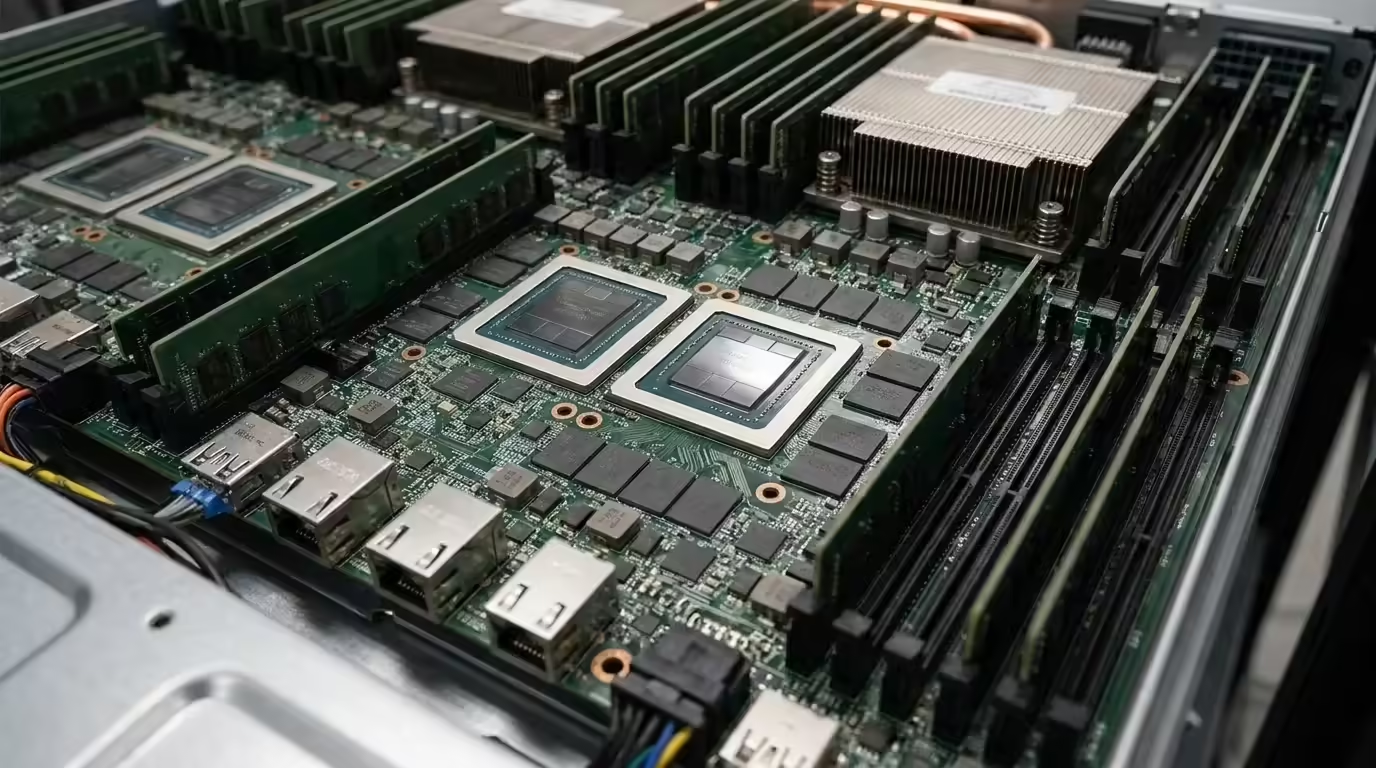
A semiconductor marketing agency turns chip architecture into content that three groups can act on.
- Buyers at data center operators, AI labs, and hyperscalers need to see why your chip lowers cost, power, or latency for their workloads.
- Late-stage investors, many of them generalists, need to understand your edge without reading a white paper.
- Engineers need a reason to join you instead of the giants down the road.
Each group needs a different version of the same story. In practice, the work spans pitch films, product explainers, LinkedIn clips, and recruiting video. Good semiconductor marketing keeps the technical truth intact while changing the level of detail for each audience.
Why Benchmark Slides Are Not Enough
Most chip founders pitch the way they were trained. They show tokens per second, performance per watt, and a block diagram only other chip engineers can read.
Benchmarks matter, but they have two problems. Every competitor has a benchmark where they win, so buyers have learned to discount them. And a benchmark shows the result, not the reason.
The people who sign purchase orders want the reason:
- Why does your design move less data?
- Why does it waste less power?
- Why will it still matter when the next GPU generation ships?
Video is the fastest way to answer those questions. Wyzowl's 2026 research found that 63% of people would most like to watch a short video when learning about a product or service.
3 Content Plays for Bay Area Chip Startups
These three plays give semiconductor startups the most reach for the least engineering time.
1. Animate what happens inside the chip

Nobody can see inside your chip. That is exactly why a short animation works so well.
A 60-second mechanism animation can show how data flows through your architecture, where the old approach wastes time or energy, and where yours does not. It gives a hyperscaler buyer or a generalist investor a mental model they can repeat in their next meeting.
The key is showing the principle without the blueprint. A good animation explains dataflow, memory movement, or optical links at a conceptual level. It never reveals floorplans, circuit details, or anything your patent counsel wants protected.
A simple rule helps:
- Safe to show: the problem you solve, how data moves at a high level, and published benchmark results.
- Keep private: floorplans, RTL, schematics, and unpublished performance targets.
We work under NDA and review every script with your engineering team before animation starts. Our guide on how to make a startup explainer video that gets watched covers the scripting side.
2. Turn conference talks into short clips
Bay Area chip founders speak at more events than they realize. Hot Chips at Stanford, investor days, customer summits, and podcast interviews all create hours of footage.
Most of it ends up as one long recording that few people finish. A single 30-minute talk usually holds several strong moments that each work as a standalone clip. Think of the one slide that explains your edge, a sharp answer in Q&A, or a live demo.
Cut those moments into 30 to 60 second clips for LinkedIn and YouTube Shorts, each built around one idea and captioned for silent viewing. Your talk then keeps working for months. Our framework for how to repurpose one webinar into 8 video assets applies directly to conference talks.
3. Build recruiting content to compete with Big Tech

Your hiring competition is Nvidia, Apple, and Google, all within a short drive. They offer brand names and stability. You offer ownership and a harder problem.
The talent pool is tight. The Semiconductor Industry Association projects that about 67,000 US semiconductor jobs for technicians, computer scientists, and engineers risk going unfilled by 2030.
A recruiting video lets your engineers explain, in their own words, why they left a big company to build something new. Candidates trust that more than any job description. Moments like first silicon coming back from the fab are exactly what engineers want to be part of.
Put it on your careers page, in LinkedIn job posts, and in your recruiters' outreach.
How to Choose a Semiconductor Marketing Partner in Silicon Valley

Most Bay Area agencies know SaaS. Very few can explain why memory bandwidth limits AI inference.
Before you hire a semiconductor marketing agency, check for these signs:
- They can explain your architecture back to you after one call.
- They will sign an NDA and have a clear process for engineering review.
- They know the difference between talking to a hyperscaler buyer and a generalist investor.
- They can turn existing footage into content, not just plan new shoots.
- They understand B2B deal cycles that run for quarters, not days.
For more on showing technical proof on camera, see our deep tech video marketing playbooks. For fundraising content, read what investors actually want to see in a startup pitch video.
Make Your Architecture Visible in 60 Seconds
Nobody can see what happens inside your chip, which is why most semiconductor marketing is a wall of benchmarks. The startups that stand out make their advantage visible.
We build mechanism animations that show your architecture in 60 seconds, without exposing the design details you need to protect. We also make recruiting videos for teams competing with Big Tech for engineers, and we turn your conference talks into short-form clips.
See our work in our case studies, then book a call to see what we would build for your chip.

Frequently Asked Questions