How to Make a Startup Explainer Video That Actually Gets Watched (2026 Guide)
If you are a startup founder, you have probably been told you need an explainer video. What nobody tells you is how to actually make one that works. This guide walks you through every step so you end up with something investors and customers will watch from start to finish.
What Is a Startup Explainer Video?
A startup explainer video is a short video, typically 60 to 90 seconds, that answers one question: what does your product do and why should anyone care? It is not a product demo. It is not a pitch deck in video form.
Done right, it becomes your hardest-working asset. It lives on your homepage, pitch deck, LinkedIn, and every investor email you send.
Step 1: Lock In Your Core Message Before You Touch Anything Else
This is the step most founders skip, and it is the reason most explainer videos fail.
Before you write a script, answer three questions in one sentence each:
- Who is your customer? Be specific. Not "businesses." Not "people."
- What problem do they have right now?
- How does your product fix it?
If you cannot answer all three in plain language, your video will not work. No production quality will save a confused message. If your grandmother would not understand it, cut it.
Step 2: Write the Script Using the Problem-Solution-Proof Structure
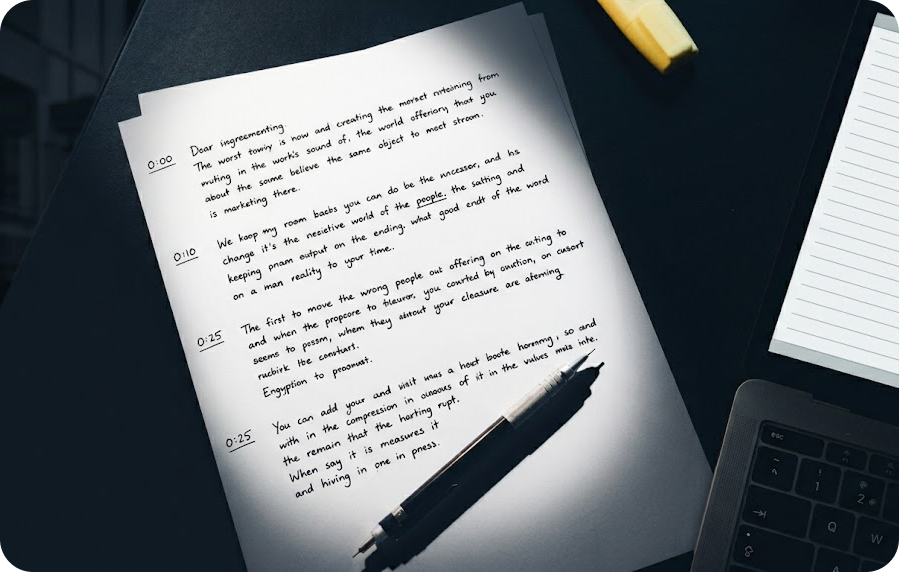
Your script is the foundation. Every other decision flows from it.
Use this structure:
Hook (0–10 seconds): Open with the problem your customer already feels. Not your solution. The problem. This is what makes people lean forward.
The Problem (10–25 seconds): Make it specific. Numbers help. "Founders waste 12 hours a week trying to explain their product" lands harder than "communication is difficult."
Your Solution (25–50 seconds): Introduce your product as the answer. Explain what it does, not how it works internally. Keep it benefit-first.
Proof or Credibility (50–70 seconds): One data point, one result, or one real customer outcome.
Call to Action (70–90 seconds): Tell them exactly what to do next. One action only.
Your total script should be 200 to 240 words for a 90-second video. Time yourself reading it out loud before you greenlight anything.
Step 3: Choose the Right Video Style for Your Startup
There is no universally correct format. The right style depends on what you are explaining and who you are talking to.
Motion graphics and animation: Best for deep tech, health tech, or climate tech where the product is invisible or complex. Animation shows mechanisms, processes, and data in ways live footage cannot.
Live action: Best for products with a physical component, consumer-facing services, or founder-led trust-building.
Hybrid: Combines live footage with animated overlays or data visualizations. Effective when you need both human trust and technical clarity.
For most deep tech and health tech founders, motion graphics paired with a strong voiceover is the most versatile choice. It works on mute, scales across formats, and protects proprietary processes while still showing how your technology works.
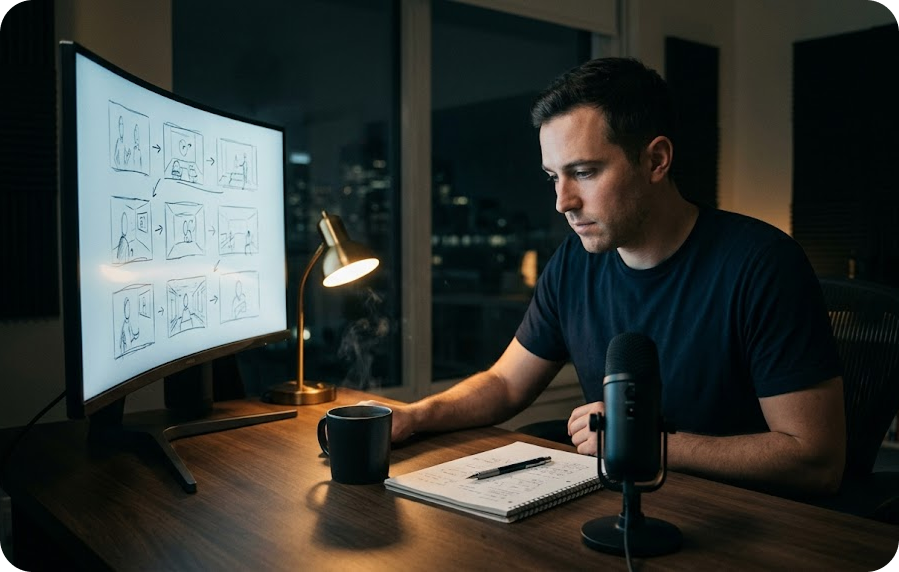
Step 4: Plan the Visuals With a Storyboard

A storyboard is a simple scene-by-scene breakdown of what appears on screen while each line of script plays.
You do not need a professional animator to do this. A rough sketch or a text-based list of scenes works fine at this stage.
For each script line, ask: what would make this clearer if someone could see it?
If your voiceover says "patients wait up to 14 days for test results," show a frustrated person waiting, not a lab. Always visualize the human experience, not the technology.
Keep transitions fast. Viewers on LinkedIn and YouTube expect a new visual every 3 to 5 seconds.
Step 5: Record the Voiceover First, Then Animate to It
Most founders get this backwards. They animate first, then try to fit audio in.
Record your voiceover, or hire a professional voice actor, before any animation begins. Use that audio file as the timeline for every visual decision.
If your startup is in healthcare or climate, keep the tone calm and authoritative. Trust is built through clarity, not enthusiasm. A quality USB microphone and a quiet room are enough for a working draft.
Step 6: Edit for Clarity, Not Length
The goal is not to hit 90 seconds. The goal is to cut every second that does not earn its place.
Ask yourself for each scene: if I removed this, would the message still work? If yes, cut it.
Three edits that improve almost every explainer video:
- Cut the company history. Viewers do not care when you were founded.
- Remove feature lists. One core benefit beats five features every time.
- Tighten the CTA. "Book a call" is better than "reach out to learn more about our solutions."
Add captions. Over 85 percent of social media video is watched on mute.
Step 7: Distribute It Like a Campaign, Not an Afterthought

A great explainer video that nobody sees is an expensive file on your desktop.
Embed it on your homepage above the fold. Add it to your investor pitch deck. Post a trimmed 30-second cut on LinkedIn with the full version linked in comments. Send it in cold outreach. Use it in onboarding flows.
One video can become 8 to 10 pieces of content across platforms when repurposed correctly. See our guide on repurposing one video into 15+ content assets for the exact framework.
The Part Most Guides Leave Out: IP and Compliance
If you are in health tech or climate tech, your video may reference proprietary data, clinical claims, or regulated processes.
Get your scientific or legal team to review the script before a single frame is animated. In healthcare, unverified marketing claims carry real regulatory risk.
This is also why your production partner matters. Not every agency knows how to explain a medical device or carbon sequestration mechanism without oversimplifying. See how we approach this at Alluvium Media.
How Long Should Your Startup Explainer Video Be?
For a homepage explainer: 60 to 90 seconds. For social media: 30 to 45 seconds. For an investor pitch deck: 90 seconds maximum.
Longer is not more thorough. Longer is a faster way to lose people.
Wyzowl's 2025 State of Video Marketing report found that 96 percent of people have watched an explainer video to learn about a product, and viewers retain 95 percent of a message from video versus 10 percent from text. The format works. Length kills it.
What to Look for If You Hire Someone to Make It

Not every agency is built for startups in regulated or complex industries. Before signing anything, ask:
- Do they write the script, or do you?
- Have they worked on technically complex products before?
- Will your scientific or legal team be part of the review?
- Do they animate to a locked audio file?
- What is included in revisions?
The script phase is where most of the value gets created. If an agency skips straight to motion graphics without a rigorous scripting process, the end result will look polished but convert poorly.
If you are building in health tech, deep tech, or climate, book a call with us. We script, storyboard, and produce explainers for founders whose product is hard to explain and whose audience needs to trust what they are seeing.

Frequently Asked Questions