Carbon Capture Marketing: How Climeworks Turned Carbon Removal Into a Story Millions Watched
Carbon capture marketing is the practice of building demand and trust for a product most people cannot see, touch, or fully verify yet. Climeworks, the Swiss direct air capture company, solved it by treating carbon removal as a story instead of a spec sheet. It built a consumer-facing brand in an industry that normally speaks only to governments and heavy emitters, using documentary films, facility footage, founder-led explainers, and a self-service shop that lets anyone remove a single kilogram of CO2. Since launching that shop in 2019, it has signed up more than 21,000 customers, according to the company. In our work with climate and deep tech founders, we see this pattern win repeatedly. Here is the Climeworks playbook, and what pre-scale founders can borrow from it.
Why Carbon Capture Is a Marketing Problem, Not Just an Engineering One
Carbon capture is a marketing problem because the product is still scaling: the company must sell belief in future capacity, not only proven output.
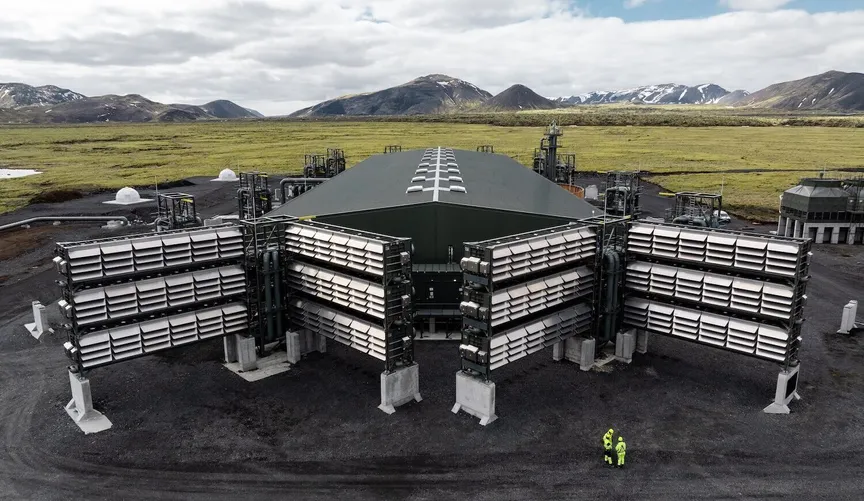
Climeworks runs two plants in Iceland, Orca and Mammoth. Mammoth is designed to capture 36,000 tons of CO2 per year, yet in its early operating months it removed a small fraction of that, according to reporting by Bloomberg. The technology works. The gap between the promise and the delivered tonnage is wide and public.
The market is real: the IPCC projects that hitting the 1.5C target will require removing billions of tons of CO2 this century. Most carbon removal companies respond to the delivery gap by going quiet, talking to policymakers and enterprise buyers behind closed doors while the conversation stays invisible to normal people.
Climeworks did the opposite. It decided that if the machines were still scaling, the narrative could scale first. That single choice, building public belief ahead of full capacity, is the root of everything else it did, and the core of deep tech marketing before your product exists.
The Documentary Play: Borrowing the BBC's Credibility
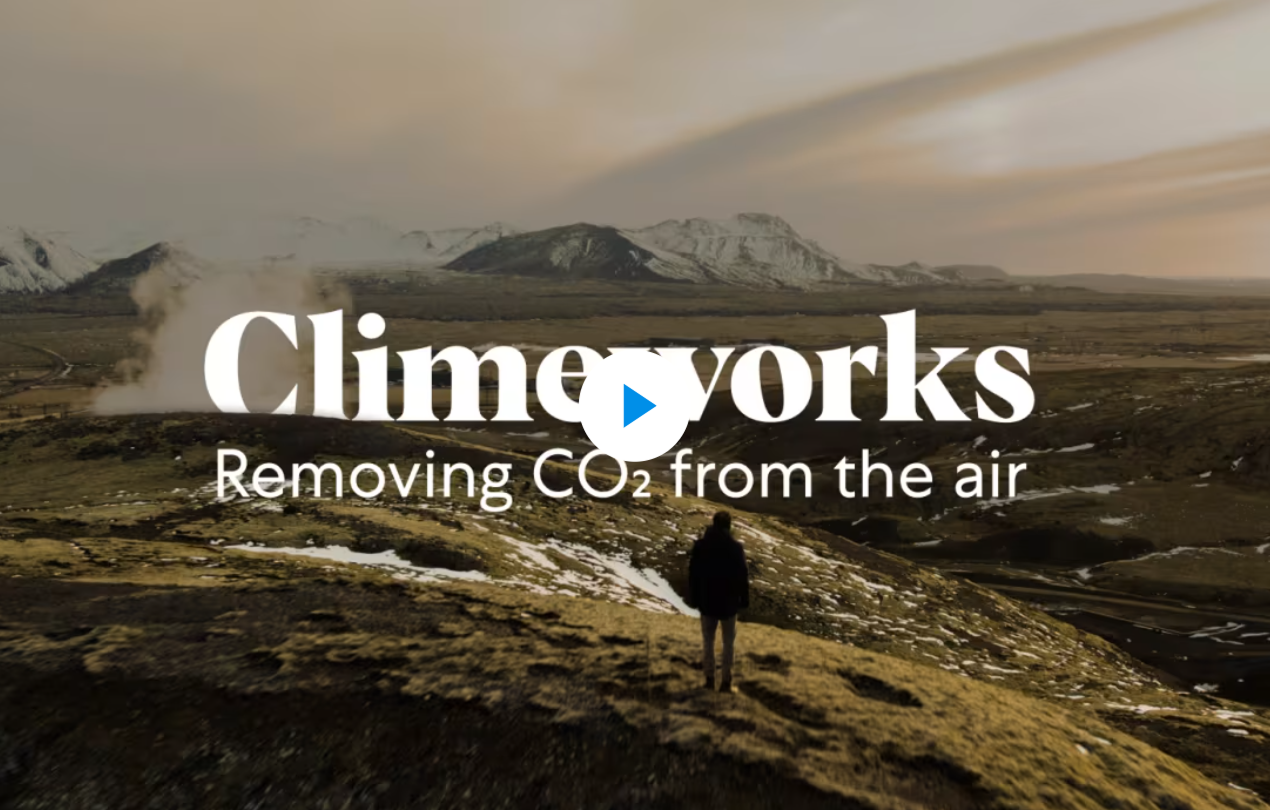
Climeworks handed its story to a trusted narrator, partnering with BBC StoryWorks on a documentary rather than explaining its own importance in an ad.
It worked with BBC StoryWorks, the branded content studio inside BBC Studios, on a documentary-style film titled "Climeworks: Removing CO2 from the air." The film sits inside a 30-part series called Humanising Energy, presented with the World Energy Council.
A startup explaining its own importance sounds like a sales pitch. A documentary made with BBC-grade craft feels like journalism, borrowing trust the company had not yet earned.
Years earlier, it opened its Hinwil plant to a BBC crew filming Greta Thunberg, with co-founder Jan Wurzbacher guiding her through the technology on camera. The lesson: hand your story to a credible narrator and it stops sounding like an ad.
Turning a Factory Into Content
Climeworks made its plants the star of its content, filming an otherwise invisible industrial process until it looked cinematic.
Direct air capture is, on paper, dull: fans, filters, steam, and pipes doing chemistry inside steel boxes in a lava field. Climeworks understood that its strangest asset was also its strongest. The Orca and Mammoth plants look like science fiction, rows of stackable collectors on black Icelandic rock. So the company filmed them constantly. Behind-the-scenes footage, drone shots, and explainer clips turned that process into spectacle and made an invisible service visible.
This is a core principle of video marketing for climate tech startups. If your product is abstract, show the mechanism. People do not fund or trust what they cannot picture.
Founder Storytelling as the Trust Engine
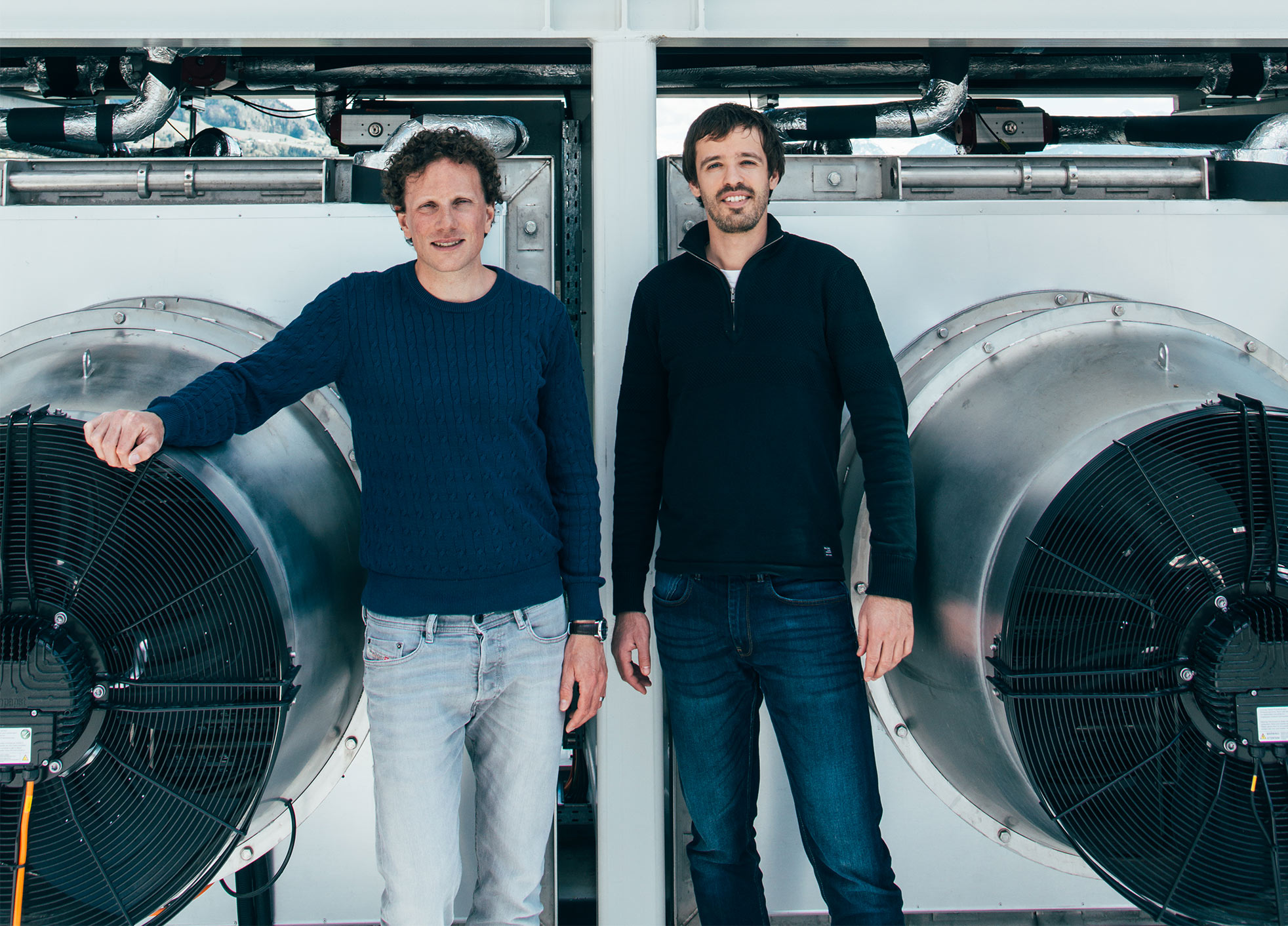
Climeworks put its two founders at the center of the brand, using a human origin story to make a planetary problem relatable.
Jan Wurzbacher and Christoph Gebald met as engineering students at ETH Zurich, researched direct air capture during their PhDs, and spun the company out of that work in 2009. That origin story, two friends deciding to reverse-engineer the atmosphere, does something no data point can.
As co-CEOs, both appear consistently across interviews, films, and talks, and when skepticism hit, Wurzbacher answered hard numerical questions from journalists on the record.
Founders are the highest-trust asset a technical company owns, which is why founder-led video works. Climeworks proves the point at scale.
The Corporate Deals That Double as Marketing
Every contract Climeworks signs works twice: once as revenue, once as a credibility-signaling headline.
Microsoft, Stripe, Shopify, Swiss Re, Morgan Stanley, British Airways, and The Economist Group have all bought its carbon removal. The Economist became the first media group to fold CO2 removal into its sustainability strategy in 2021. Morgan Stanley signed a 40,000-ton agreement in 2024, reported by The Wall Street Journal. Coldplay tapped Climeworks for a world tour.
Then came the sharpest brand move of all. In early 2025, TikTok signed a multi-year deal for Climeworks to remove 5,100 tons of CO2 by 2030, according to Climeworks. A carbon removal company selling to the most culturally dominant app on earth is proof the technology had entered the mainstream.
Underneath the enterprise logos sits a quieter engine: the self-service shop, whose 21,000-plus subscribers became both a revenue line and a grassroots marketing army.

How Climeworks Handles Greenwashing Accusations
Climeworks answers greenwashing accusations with third-party verification and public data, not louder claims.
Loud marketing invites scrutiny. In 2025, the Icelandic outlet Heimildin reported that Climeworks' plants were capturing far less than their designed capacity and had not yet offset the emissions from the company's own operations. Critics pointed to a large forward order book set against a much smaller number of delivered credits. In May 2025, Climeworks laid off about 106 people, roughly 22% of its staff.
Its response was not spin. The company leans on third-party verification through Puro.earth and DNV, and Wurzbacher explained that forward contracts fund the plants that do future capture.
The takeaway is blunt: ambitious storytelling and rigorous proof are not opposites. Skip the proof and your marketing becomes the evidence against you. That is the exact line we walk in our guide on how to avoid greenwashing in climate tech marketing.
What Climate and Deep Tech Founders Can Steal From This
You do not need Climeworks' budget to use its playbook. You need its priorities: mission first, visible proof, and founders who show up.
- Sell the mission before the machine. Build belief in the category, then make yourself its face.
- Make the invisible visible. If your product is abstract, film the mechanism.
- Borrow credibility you have not earned yet. Documentaries, respected buyers, and certifiers lend trust faster than you can alone.
- Put your founders on camera. A technical origin story humanizes a technical product.
- Let every win become content. Every partnership, milestone, and customer is a story.
- Back every claim with proof. Unverifiable hype does not just fail to convert. It destroys trust.
Climeworks turned a steel box in a lava field into a story millions watched, and that tension is the whole lesson: great storytelling opens the door, but only honest proof keeps you in the room.
That balance is what we build for climate and deep tech founders. If you are making complex, pre-scale technology feel real to investors and buyers, let's talk about your story.

Frequently Asked Questions