Green Steel Marketing: How Boston Metal Sells Industrial Decarbonization to Steelmakers
Green steel marketing is the practice of selling low-carbon steel technology to steelmakers, miners, and industrial investors. Boston Metal, the MIT spinout behind molten oxide electrolysis (MOE), does it with peer-reviewed science, pilot plant data, investment from steelmakers like ArcelorMittal and Tata Steel, and a CEO with decades in the metals business.
For heavy industry buyers, verified proof beats brand storytelling.
Below: how Boston Metal built credibility, how it held up in 2026, and what B2B DeepTech founders can copy.
Why Is Steel So Hard to Decarbonize and Sell To?
Steel is hard to sell to because it is a high-emission, high-capital industry. Plants cost billions and run for decades, so buyers need hard data before changing a process that has worked for over a century.
According to the World Steel Association, each tonne of steel made in 2022 emitted an average of 1.91 tonnes of CO2. The sector's direct emissions equal 7% to 9% of the global total.
Most emissions come from one route: coal-based blast furnaces paired with basic oxygen furnaces. Deloitte estimates about 70% of global steel is still produced this way.
Plant engineers and investment committees have seen many "breakthroughs" fail at scale. A brand video will not move them. Verified data will.
What Is Molten Oxide Electrolysis?
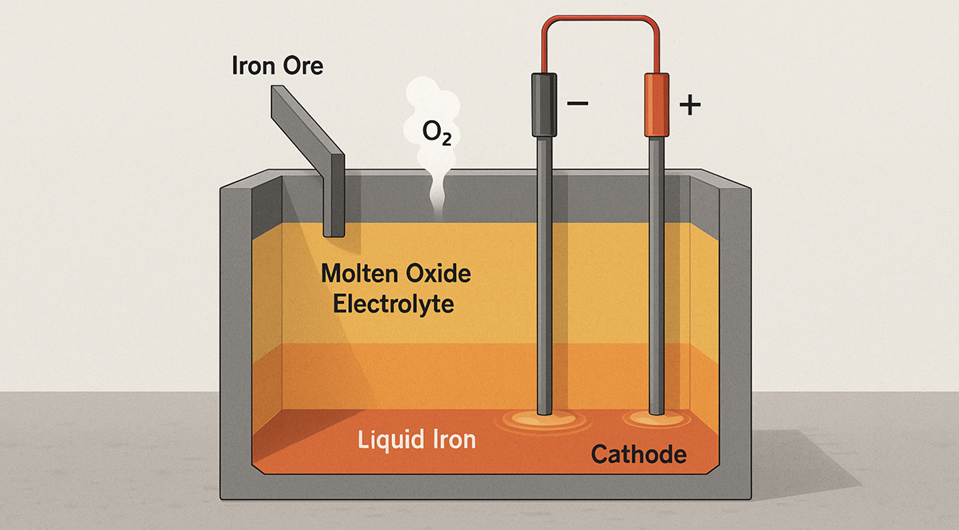
Molten oxide electrolysis (MOE) is a steelmaking process that uses electricity instead of coal to separate iron from iron ore. Boston Metal's cell dissolves ore in a molten electrolyte and produces liquid metal and oxygen gas rather than carbon dioxide.
Boston Metal was founded in 2013, the same year its research team published its inert anode work, developed in MIT professor Donald Sadoway's lab, in the journal Nature.
The process works in four steps:
- Iron ore is dissolved in a molten oxide electrolyte inside a sealed cell.
- Electric current heats the bath to about 1,600°C.
- Iron separates from oxygen and collects at the bottom as liquid metal.
- The inert anode releases oxygen instead of CO2.
MOE removes coke ovens, ore sintering, and the blast furnace from the process. With carbon-free electricity, it eliminates Scope 1 and Scope 2 emissions from ironmaking. Claims this precise demand disciplined marketing.
Green Steel Marketing vs. Consumer Climate Marketing
Consumer climate brands win attention with emotion and story. Green steel marketing wins trust with evidence that engineers can verify.
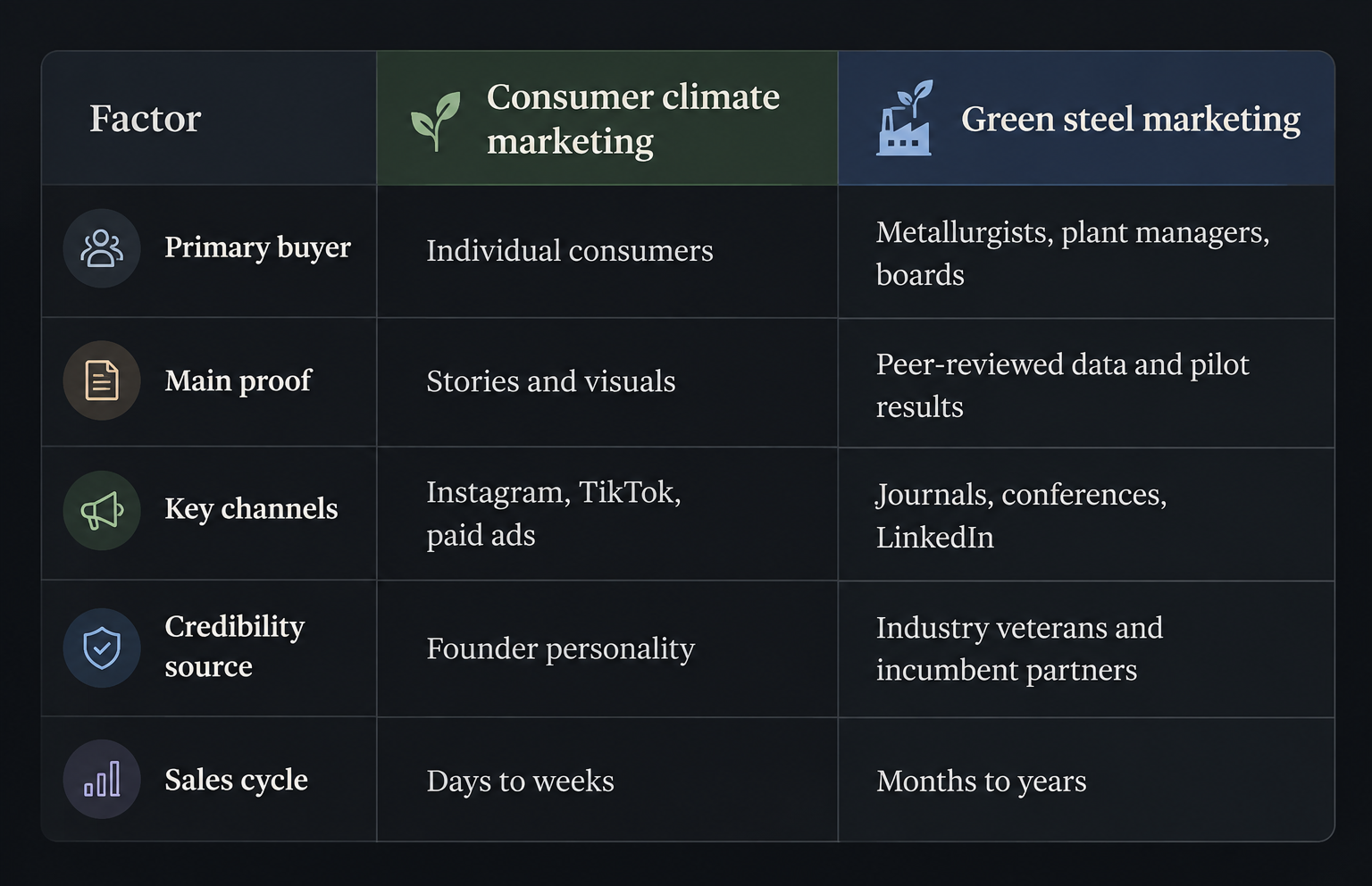
How Boston Metal Built Credibility With Steelmakers
Boston Metal built credibility through four moves: publishing peer-reviewed science, hiring a metals industry CEO, bringing steelmakers onto its cap table, and announcing specific, verifiable milestones.
1. Lead with peer-reviewed science
Boston Metal started with a paper in Nature, not a launch campaign. For technical buyers, peer review is the strongest first impression because independent experts have already checked the claims.
2. Put an industry veteran in charge
In 2017, Boston Metal named Tadeu Carneiro CEO, when the company had only a handful of employees.
Carneiro, a metallurgical engineer, spent nearly three decades at Brazilian niobium producer CBMM, including 10 years as CEO. According to Boston Metal, he grew CBMM's revenue from $100M to over $2B.
When Carneiro speaks at industry events, steel executives hear a peer discussing ore grades, tonnage, and capital costs, the vocabulary his buyers use daily.
3. Turn incumbents into investors
In January 2023, ArcelorMittal, one of the world's largest steelmakers, led a $120M first close of Boston Metal's Series C through its XCarb Innovation Fund. By September 2023, the round totaled $262M, with backers including Breakthrough Energy Ventures (founded by Bill Gates), BHP Ventures, Microsoft's Climate Innovation Fund, and Aramco Ventures.
Each incumbent investor acts as a public endorsement. When a competing steelmaker sees ArcelorMittal on the cap table, the question shifts from "Does this work?" to "Are we falling behind?"
4. Let milestones do the talking
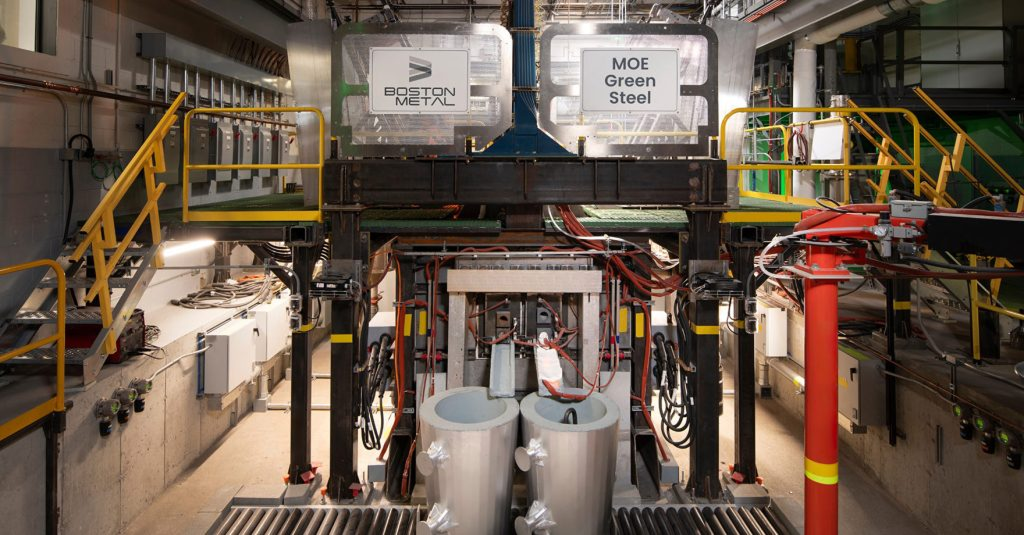
In March 2025, Boston Metal commissioned its multi-inert anode industrial cell in Woburn, Massachusetts. MIT Technology Review reported that the run produced more than a ton of metal. Carneiro summarized the result simply: "tonnage steel is flowing from our multi-inert anode MOE cell."
One verified tonne of metal persuades more than any rendering.
What Happened to Boston Metal in 2026?
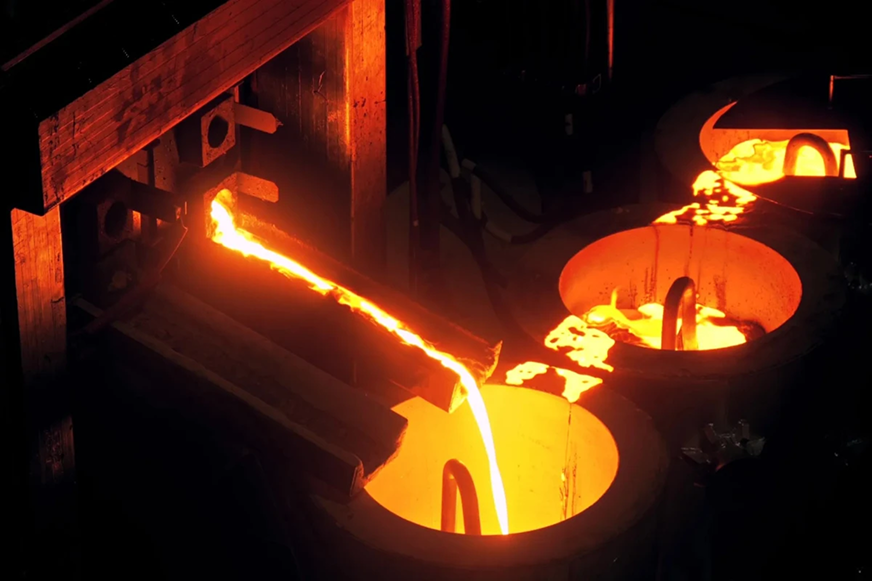
In early 2026, an equipment failure at Boston Metal's Brazil plant cost the company committed financing and led to 71 US layoffs. By May 2026, it had raised $75M more, with Tata Steel joining, and shifted its near-term focus to critical metals.
The January 30 failure halted operations in Brazil. The company said it missed a milestone tied to pending financing, then cut 71 jobs in Massachusetts.
MOE steel had also proven costlier and more complex than planned, so Boston Metal narrowed its focus to critical metals such as niobium, tantalum, vanadium, and nickel, using the same platform.
In May 2026, Boston Metal announced a $75M raise that brought total funding to over $500M.
The lesson: credibility built with insiders over years can survive a public setback. Heavy industry trust grows slowly but lasts.
What Should B2B DeepTech Founders Selling to Traditional Industries Copy?
Founders selling to steel, cement, mining, chemicals, or utilities should copy Boston Metal's evidence-first approach in five ways:
- Speak the buyer's language: their units, metrics, and technical terms.
- Put data before adjectives. Replace "revolutionary" with tonnage, yield, and cost per unit.
- Borrow credibility from industry veterans, peer review, and incumbent investors.
- Sell a near-term win. Boston Metal's critical metals business can generate revenue sooner than steel.
- Document every milestone. Each verified result becomes new proof.
Never overclaim, because heavy industry buyers reject exaggeration quickly. Our guide on how to avoid greenwashing in climate tech marketing explains how to keep claims specific. For two contrasting hard-tech strategies, see our fusion energy startup marketing comparison.
Why Does Industrial Proof Need Video?
Industrial proof needs video because technical buyers rarely read research papers, but they do watch short clips. Video turns hidden processes, facility footage, and conference talks into proof decision makers grasp in under a minute.
Boston Metal's process, with metal melting at 1,600°C, is highly visual. Yet most of its proof sits in press releases, PDFs, and conference halls.
In our work with deep tech founders, we see this gap constantly: plenty of proof, very little visible proof.
Three formats close that gap:
- Mechanism animations show how a process works without exposing proprietary details.
- Conference repurposing turns one founder keynote into weeks of LinkedIn and YouTube clips.
- IP-safe versions let you share visuals publicly while protecting sensitive parameters.
Our breakdown of 4 deep tech video marketing playbooks shows how others make invisible technology visible, and our webinar repurposing framework works for founder keynotes too.
Make Your Invisible Technology Visible
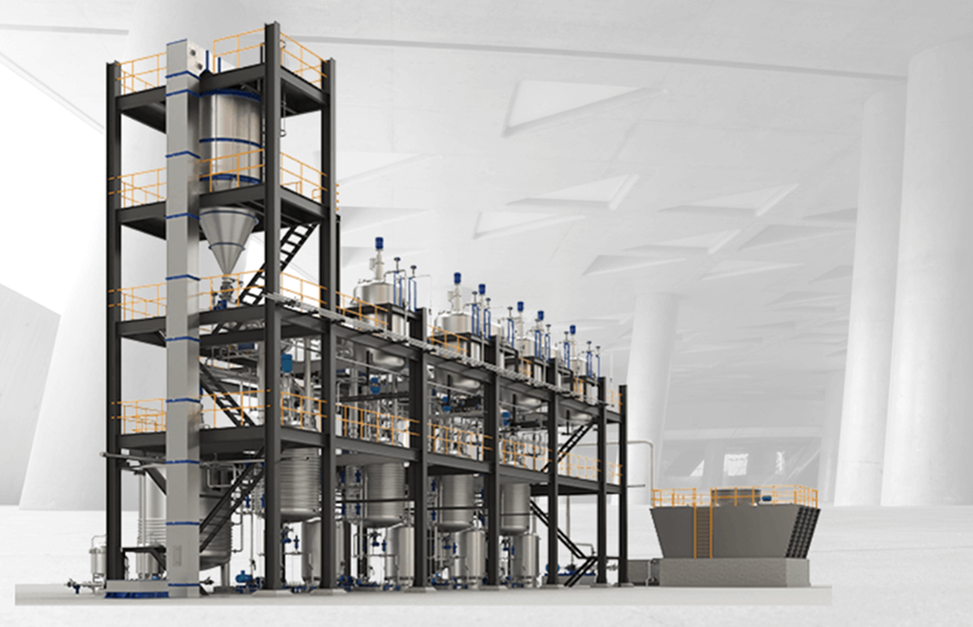
Most hard-tech founders have hours of facility footage, pilot plant demos, and conference talks that never become content.
At Alluvium, we make invisible technology visible with mechanism animations that show how your process works without exposing proprietary details, and short-form LinkedIn and YouTube clips repurposed from your founder's conference appearances. See the results in our case studies.
Your buyers are already skeptical. Give them proof they can see.

Frequently Asked Questions