Climate Tech Marketing Agency Boston: From Pilot to Customer
A climate tech marketing agency in Boston helps startups get from a successful pilot to a signed commercial contract. Utilities, manufacturers, and building owners do not buy on mission. They buy on proof, so the content that works shows pilot results, makes test data visible, explains how the technology works without exposing IP, and builds founder credibility with conservative buyers.
This guide covers why Boston's climate founders get stuck after the pilot, what industrial buyers actually need to see, and four types of content that move deals forward.
Boston's Climate Tech Engine Room
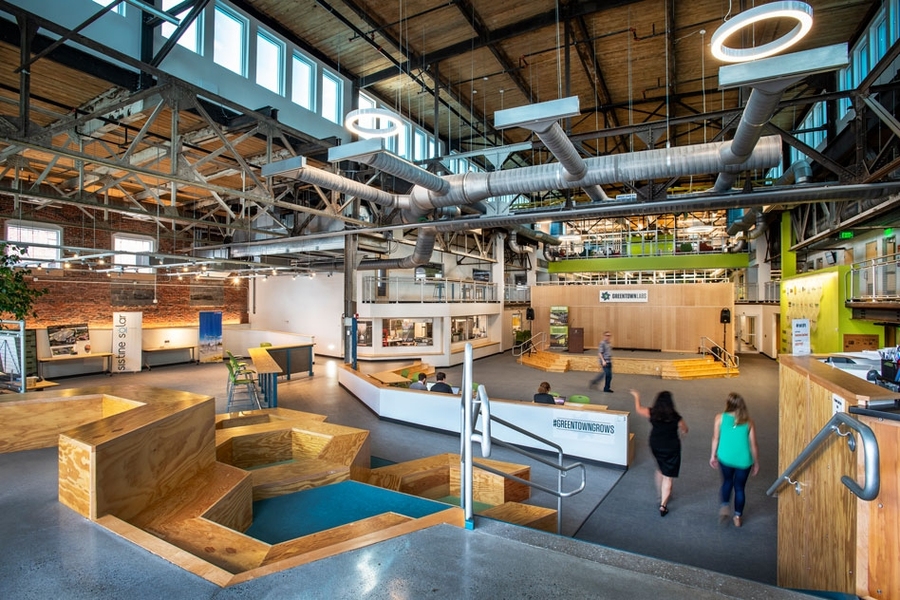
Somerville, just outside Boston, is home to Greentown Labs. It describes itself as the largest climate tech startup incubator in the world, with a roughly 100,000 square foot campus and more than 150 member companies.
The region keeps investing in that pipeline. On May 19, 2026, the Massachusetts Clean Energy Center announced $18 million in awards to five organizations, including:
- Greentown Labs, $4.95 million, for the Greentown Commonwealth Electrons Lab, a pilot-grade battery fabrication and testing facility expected to take one to three years to become operational
- The Engine in Cambridge, $1.69 million, to expand shared prototyping equipment such as electrolyzers, 3D printers, and thermal systems, which will be available to startups, researchers, and partners over the next five years
Energy storage is a big part of the story. According to Cambridge Day, Greentown's Julia Travaglini said 40% of its members are energy storage companies, and that "there isn't a facility like this within 400 miles of New England."
Boston is very good at helping climate founders prove their technology works. The harder problem comes next.
The Real Problem Is Pilot Purgatory

Pilot purgatory is what happens when a climate startup completes a successful pilot but cannot convert it into a commercial contract.
The technology works. The customer is interested. And nothing moves for months.
Every month in purgatory costs runway, and a stalled pilot makes the next investor ask why customers are not buying.
The buyers are the reason. Utilities, manufacturers, and building owners are famously slow and cautious, and for good reason. A failed installation can mean an outage, a production stop, or a safety issue.
These buyers do not respond to climate mission statements. They respond to proof, reliability, and a clear picture of how your technology fits their operations. Most climate startup marketing still leads with the mission.
What Industrial Buyers Actually Need to See

Before an operations or procurement team signs, they want answers to practical questions:
- Has it worked reliably over time, not just in a short test?
- How does it connect to our existing equipment and systems?
- What are the safety, permitting, and compliance requirements?
- What is the total cost, and how long is the payback?
- Who else is using it, and what happened?
- What happens when something goes wrong?
Every piece of content you make should answer at least one of these questions. If it only explains why climate change matters, the buyer already knows.
Different people inside the buyer care about different answers. Operations wants uptime, finance wants payback, and safety teams want risk controls, so good content addresses each one.
What Does a Climate Tech Marketing Agency in Boston Do?
A climate tech marketing agency in Boston turns technical results into content that conservative buyers, investors, and partners trust. That usually means filming pilot sites, animating how the technology works, cutting short proof clips from test footage, and producing pitch films for fundraising.
The best agencies work in the buyer's language: uptime, efficiency, payback, and integration, not slogans. Ask any agency for examples of industrial, energy, or materials work before you hire.

4 Types of Proof Content That Move Pilots Forward
These formats are built for the slow, careful buyers that climate startups sell to.
1. Pilot site proof videos
Nothing convinces a utility like seeing the system working at a site similar to theirs. Film the installation, the operation, and the people running it, with the customer's permission.
Add simple on-screen data, such as hours of operation or energy delivered, so the video shows results rather than just hardware. A two-minute pilot video can travel through a buyer's organization far faster than a technical report.
Plan filming rights into the pilot agreement before the system arrives on site, so the best footage is usable.
2. Test data made visible
Most climate startups have strong test data buried in spreadsheets and slide decks. Turn it into short animated charts and clips that show cycle counts, efficiency, or performance over time.
Pair each clip with one line of plain language that tells a non-engineer why the number matters.
Be honest about the limits. Industrial buyers trust a company that shows its test conditions more than one that only shows its best result.
3. IP-safe mechanism animations
Buyers want to understand how your technology works. Your patent attorney wants you to show as little as possible. A mechanism animation can satisfy both.
We often build two versions: a public version that shows the principle, and a more detailed version shared under NDA in late-stage sales conversations.
The public version builds awareness. The NDA version helps close the deal. For C-Biotech, which works with bio-based construction materials, we created videos that broke down features and processes without revealing proprietary information.
4. Founder credibility with conservative buyers
Industrial buyers trust engineers who talk like engineers. Short founder clips that explain one technical decision at a time, in plain and measured language, build that trust.
Avoid hype. A founder who says "here is what we tested, here is what we learned, here is what we still need to prove" sounds like a safe vendor. Post these clips steadily on LinkedIn, where utility and manufacturing leaders already spend time.
One recorded conversation with a founder can supply a month of clips.
Avoid Claims Buyers Will Discount
Procurement, legal, and engineering teams read your claims closely. Vague phrases like "green," "sustainable," or "net zero" without specific data can slow a deal or end it.
Every claim should be specific, sourced, and true for the conditions you tested. Check each clip against the same claims your sales team uses. Our guide on how to avoid greenwashing in climate tech marketing covers what to watch for.
Learn From Boston Companies That Did It
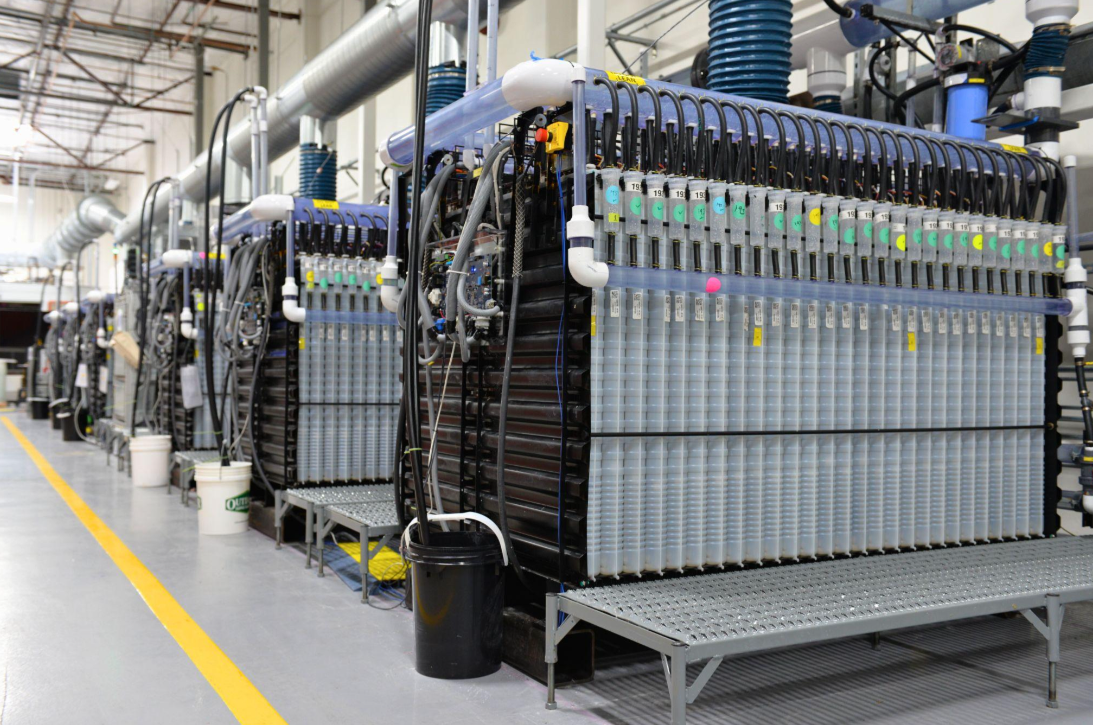
Two Boston-area climate companies show how proof-first content works. Form Energy, based in Somerville, made its iron-air battery story simple and visual, which we break down in how Form Energy made rust a feature.
Boston Metal sold a complex industrial process to one of the most conservative industries in the world. We cover its approach in our green steel marketing breakdown.
If you are still choosing a partner, our guide to choosing a deep tech marketing agency in Boston covers what to look for.
Turn Your Pilot Into Proof
Utilities and manufacturers don't buy on mission. They buy on proof. Proof that buyers can see and share is what moves a pilot to a purchase order.
We turn your pilot sites and test footage into short-form proof content, and build mechanism animations that show how your technology works, with IP-safe versions that protect what matters.
See our work in our case studies, then book a call to see what we would build from your footage.

Frequently Asked Questions