Can AI Really Find Drugs Faster? How NYC's AI Biotech Startups Should Answer the Question
AI drug discovery marketing works when it answers one question with evidence: can your AI really find or develop drugs faster? For NYC AI biotech startups, that means turning data milestones and partner deals into proof content, animating exactly where your model changes the drug development process, and putting scientists on camera to explain what the AI does and does not do.
This guide looks at New York's growing AI biotech scene, why "AI-powered" no longer impresses partners, and how founders can market proof instead of promises.
New York's Quiet AI Biotech Bench
New York has built one of the deepest benches of AI-first biotech companies in the country, mostly without the headlines Boston and the Bay Area get.
A NYC Tech Journal review in August 2026 looked at 15 private AI biotech companies with New York roots. Among the ten with public funding figures, it counted at least $1.57 billion raised, with Formation Bio, Owkin, and Immunai accounting for about 76% of that total.
The review also found that 14 of the 15 companies describe some form of experimental data feedback loop, a sign that AI and lab work are tightly linked in New York.
The newer companies are still raising large rounds:
- Proxima, formerly VantAI, raised an $80 million seed in January 2026, led by DCVC, to design proximity-based medicines.
- Fathom Therapeutics, formerly Atommap, raised a $47 million Series A in April 2026 for physics-based and AI-driven drug design.
New York's AI biotech scene is no longer emerging. It is competing.
Formation Bio's $600 Million Bet Says a Lot
Formation Bio began in 2016 as TrialSpark. It has raised more than $600 million, including a $372 million Series D in 2024, and Forbes has described it as a $1.8 billion startup.
On October 28, 2026, Formation Bio launched a $600 million fund to acquire or license about 10 to 15 drug candidates over three to five years and advance them through clinical trials. In June 2026, it also dosed the first participant in a Phase 1 study of BLKR201, a brain-penetrant TYK2 inhibitor, according to the NYC Tech Journal review.
That move says a lot about the market. Formation Bio is not just promising that AI will speed up drug development. It is putting real drugs and real money behind the claim, so the results can be measured.
"AI-Powered" Is No Longer a Pitch
Pharma partners and investors no longer get excited by "AI-powered drug discovery" on its own. Nearly every company in the field says it.
What they want to see is evidence:
- A molecule in the clinic, not just a model on a server
- A partnership with real money, such as an upfront payment or milestone structure
- A trial or program that moved faster than the industry normally allows, with a clear comparison
If your marketing cannot point to at least one of these, it reads as a promise. And partners have heard a lot of promises.
Owkin, for example, says it has worked with more than 100 academic hospitals and eight of the top ten pharma companies. Numbers like that do more than any tagline.
What Is AI Drug Discovery Marketing?
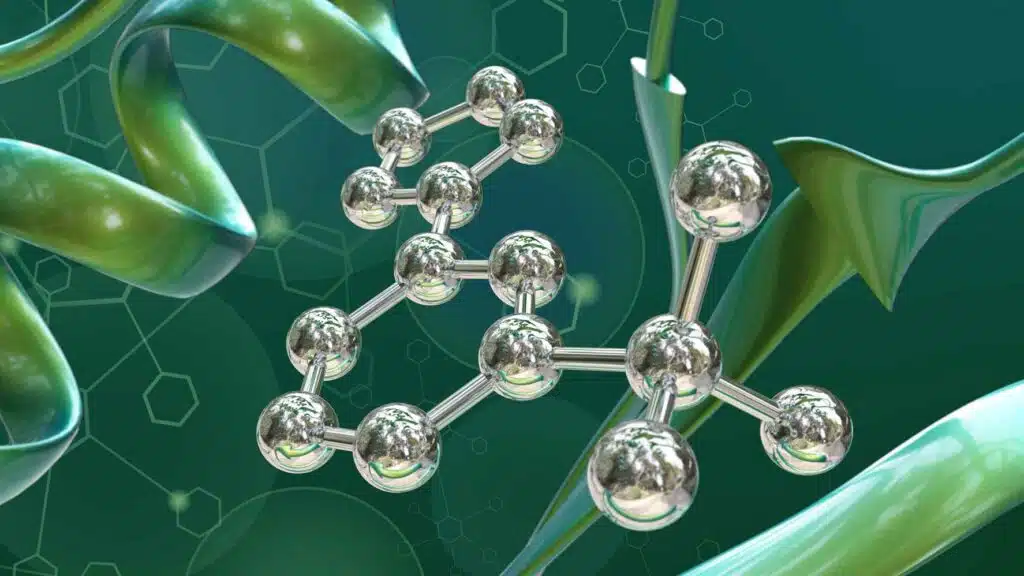
AI drug discovery marketing is the work of explaining how AI changes the discovery and development of medicines to pharma partners, investors, clinicians, and scientific talent. Done well, it relies on clear mechanism animation, documented milestones, and scientists on camera rather than broad claims about speed.
It also has to be accurate. Claims about drug candidates and clinical programs face scrutiny from partners, investors, and often regulators, so every number needs a source and a baseline.
How to Answer "Can AI Really Find Drugs Faster?"
Most partners will ask this question in the first meeting. These four approaches help NYC AI biotech founders answer it with proof.
1. Show exactly where your AI fits in the pipeline
Drug development has many stages: target discovery, molecule design, preclinical testing, and clinical trials. Most AI companies change one or two of them, not all of them.
A short animation can show the full pipeline and highlight the step your model changes. Precision about where your AI helps is more convincing than claiming it helps everywhere.
Every animation should be reviewed by your scientific team before anything is animated, and ready for medical, legal, and regulatory review if it describes clinical programs.
2. Turn milestones and deals into proof content
Every partnership, data release, and clinical milestone is proof. Formation Bio dosing the first participant in a Phase 1 study, or Proxima closing an $80 million seed, is the kind of news partners and investors remember.
Turn each one into a short clip that explains what happened, why it matters, and what comes next. Post it the day the news breaks.
Keep these clips consistent. A series of milestone videos, published over months, shows a track record that a single announcement cannot.
3. Put scientists on camera

Partners trust scientists more than marketing teams. Short clips of your chemists, biologists, and machine learning researchers explaining their work carry real weight.
Ask them to explain what the AI does and what it does not do. A scientist who says "the model narrows thousands of options to a few dozen, and then we test them in the lab" is more credible than any slogan.
That honesty also helps recruiting. Scientists want to join teams that are clear about what their technology can and cannot do.
4. Use numbers you can defend
"Faster" means nothing without a comparison. Faster than what, and measured how?
When you share a time or cost saving, name the baseline and the stage. If the comparison is an industry average, say so and cite the source. One defensible number is worth more than five impressive ones that fall apart under questioning.
The Proof Ladder for AI Biotech Content
Not all proof is equal. We think of AI biotech evidence as a ladder, from weakest to strongest:
- Claims: What your platform is designed to do
- Benchmarks: How your model performs on test data
- Partnerships: Who is paying to use your platform
- Molecules: Candidates your platform helped create, moving into the clinic
- Clinical data: Results that show those molecules work in people
Most early companies live on the first three rungs. That is fine, as long as the content is honest about it. Your marketing should always lead with the highest rung you have reached. Each time you climb a rung, update your pitch film, website, and animation so the new proof is front and center.
Learn From AI Biotechs That Built Trust

Two of our spotlights show how AI-first health companies earned credibility. Our Recursion marketing spotlight shows how an AI-first biotech built its brand, and our Viz.ai breakdown covers how an AI company won adoption in hospitals.
For the wider New York scene, see our guide to choosing a biotech marketing agency in NYC.
Show It, Don't Just Say It
Every AI biotech says it's faster. The ones that win can show it.
We create mechanism animations of how your platform changes drug development, reviewed by your scientific team before anything is animated, and turn every partnership and data milestone into short-form proof content.
See our work in our case studies, then book a call to see what we would build for your platform.

Frequently Asked Questions