Video Marketing for Tech Companies: 4 Formats That Actually Drive Pipeline
Tech companies have a video problem. Not a production problem. A strategy problem.
Most tech founders either over-invest in one polished explainer and call it done, or they post random short-form content with no clear goal. Neither approach generates pipeline.
Video marketing for tech companies works when each format matches a specific stage of the buyer journey. That is the entire strategy. Here is how to apply it.
Why Generic Video Advice Fails Tech Companies
Tech buyers do not behave like consumer buyers. They are skeptical, self-directed, and they research three to five competitors before booking a single demo.
A flashy brand video does not move that buyer. Neither does a 60-second product clip posted to TikTok without context. According to Wyzowl's 2024 State of Video Marketing report, 82% of people say video has convinced them to buy a product, but the format and placement have to match where the buyer actually is in their decision process.
Tech video strategy needs to be layered. One format for awareness. One for credibility. One for conversion. One for scale.
The 4 Video Formats Tech Companies Actually Need
Format 1: The Problem-First Short-Form Video (Awareness)
The problem-first short-form video is a 30 to 60-second clip that leads with a specific pain point rather than a product pitch. It lives on LinkedIn, YouTube Shorts, and Instagram Reels.
This is your top-of-funnel engine. Most tech companies make the mistake of leading with their product. The right move is to lead with the problem your buyer is sitting with right now.

Example hook: "If your sales team is spending 40% of their time on manual data entry, that is not a people problem."
That sentence pulls the right person in. Then you name the cause. Then you tease the solution. No pitch. Just relevance. Post at minimum twice a week, one problem per video.
Format 2: The Founder or Team Explainer (Credibility)
The founder explainer is a sub-3-minute video where the person who built the product walks through the reasoning behind it, on camera, without a script.
B2B buyers buy from people before they buy from companies. A face speaking plainly about how the product works and why it exists does more for trust than any case study PDF.
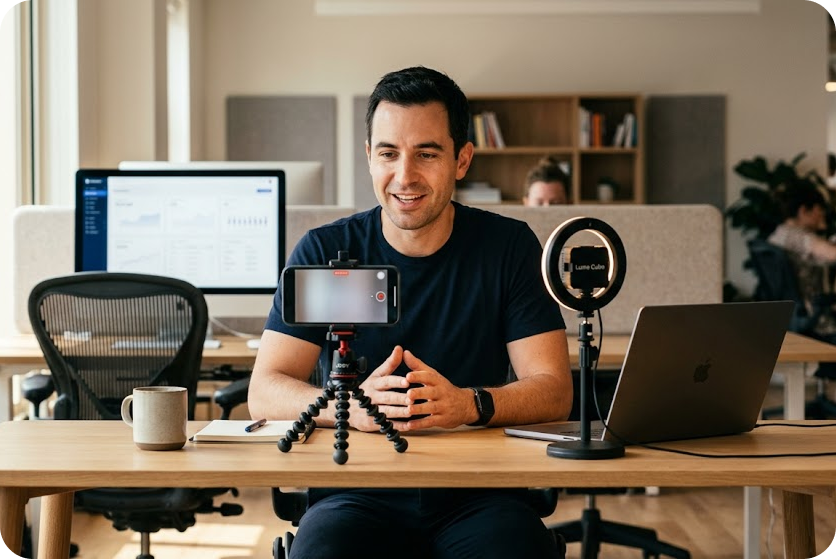
This does not require a production budget. A well-lit iPhone video of the founder walking through the why behind the product consistently outperforms a $10,000 studio shoot with no real substance. This format works especially well on LinkedIn and YouTube.
For a detailed breakdown of how founder video shortens sales cycles, read Founder-Led Video: Why Being on Camera Actually Matters.
Format 3: The Customer Proof Video (Conversion)
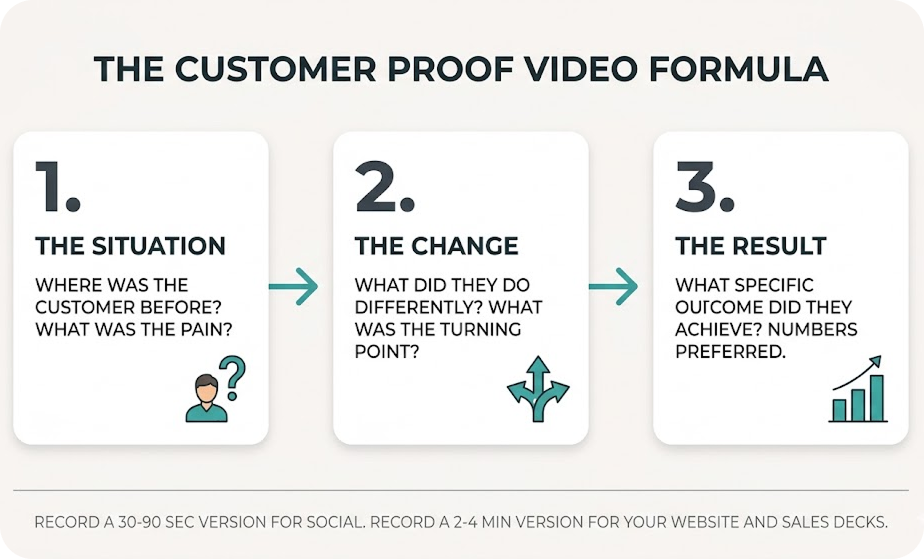
The customer proof video is a structured testimonial that follows the arc of situation, change, and result. It is not vague praise. It is a peer-to-peer story.
At the decision stage, your prospect needs to hear from someone who was in their exact situation. The formula is simple: here is what the customer was dealing with, here is what changed, here is the specific outcome.
Aim for 30 to 90 seconds for short-form distribution. Two to four minutes for your website and sales decks. Record both versions every time you shoot a testimonial.
This format shortens sales cycles. When a prospect watches a peer describe their exact pain and then describe your product solving it, that does more than five follow-up emails.
Format 4: The Repurposed Long-Form Asset (Scale)
Content repurposing for video means extracting multiple shorter assets from a single long-form recording (a webinar, a product demo, a podcast interview) and distributing them across platforms.
You are already creating this footage. Most of it lives on one platform and dies there.
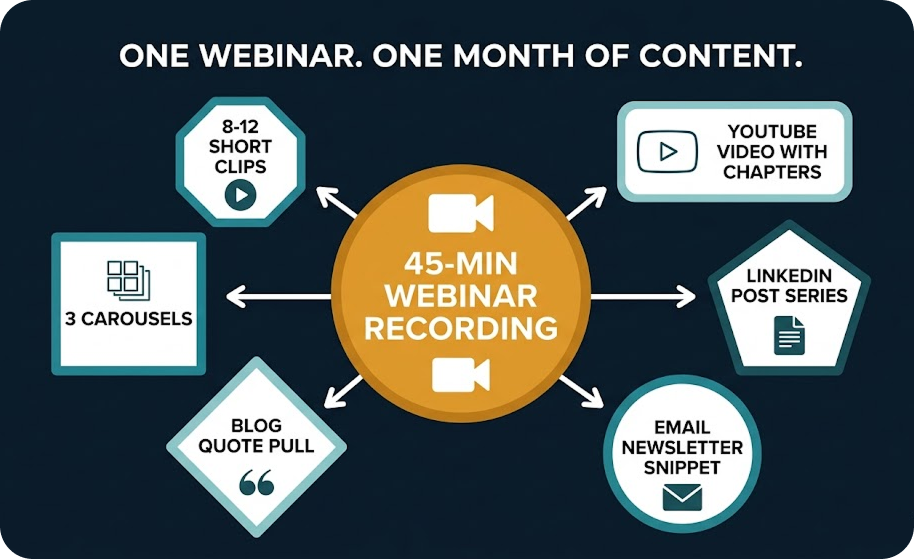
A single 45-minute webinar can generate 8 to 12 short clips, 3 carousels, and a full YouTube video with proper chapters. That is a full month of content from one hour of raw footage. If you want the exact system, read How to Repurpose One Video Into 15+ Content Assets.
This is the highest-ROI move in tech video marketing and the most consistently underused one.
Mapping These 7 Formats to a Publishing Calendar
Knowing the seven formats is useful. Knowing how to sequence them into a sustainable publishing system is what actually produces compounding results.
The most effective publishing structure for B2B founders uses a rotation across all seven formats over a four-week cycle, rather than defaulting to the same format every week.
Week one: Founder-Led Explainer and Problem-Aware Short-Form. One trust-building piece and one awareness piece. This combination introduces you to new audiences while deepening credibility with existing ones.
Week two: Customer Testimonial and Demo Walkthrough. One proof piece and one conversion piece. Mid-funnel prospects who saw your week-one content now encounter social proof and functional demonstration.
Week three: Webinar Clips and Thought Leadership Snippets. Two pieces of repurposed long-form content. This week requires no new filming, which makes it sustainable even during high-pressure periods.
Week four: Case Study Video and FAQ / Objection-Handling. One peer success story and one objection removal piece. These two formats together address the last remaining questions in a buyer's mind before they reach out.
Repeat this rotation and layer in new content from each category monthly. Within six months, you will have built a library across all seven formats that works as a passive sales tool: prospective buyers can find an answer to almost any question they have about your product, your credibility, or your results without ever speaking to your sales team first.
That self-service trust infrastructure is what separates B2B founders with efficient, inbound-driven pipelines from those still relying entirely on outbound outreach.
Where Most Tech Companies Stall
They treat video as a one-time campaign instead of a repeatable distribution system.
The companies generating real pipeline with video post consistently, repurpose deliberately, and use each format for the specific job it does in the buyer journey. They do not wait for a video to go viral. They build volume and let compounding do the work.
If you are a tech founder who wants a video strategy built around your specific sales cycle and audience, book a strategy call with Alluvium Media. We will map out exactly where video can move the needle for your business.

Frequently Asked Questions