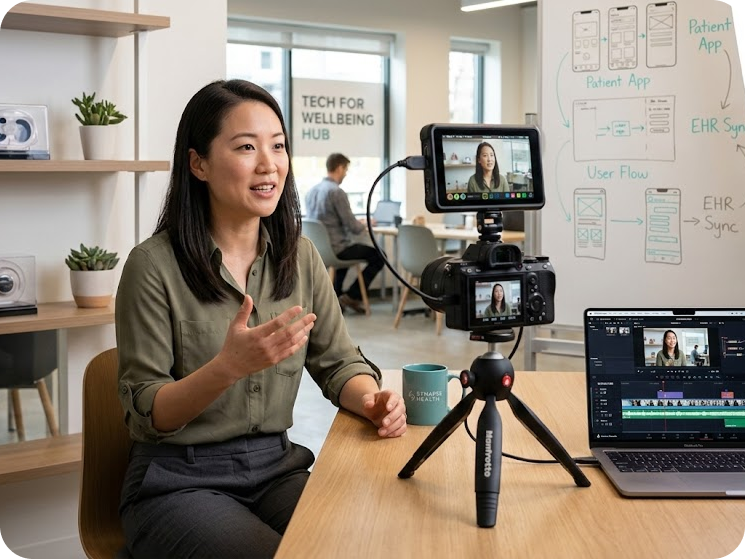
Video Marketing for Health Tech Startups in 2026: Strategy Guide
Video marketing for health tech startups requires a fundamentally different approach than standard SaaS or DTC playbooks. According to Wyzowl's 2026 State of Video Marketing report, 87% of B2B companies now use video as a core marketing tool. Yet most health tech founders either skip video entirely or copy strategies built for industries where trust is not the first barrier to sale.
That gap is your opportunity. Healthcare buyers need credibility before they consider features. This guide covers the five video formats that convert, the compliance rules that protect your brand, and a repurposing framework that turns one recording into weeks of content.
Why Do Most Health Tech Video Strategies Fail?
Most health tech video strategies fail because founders apply tactics from fintech or consumer SaaS without adjusting for the realities of healthcare buying cycles.
Your buyers are trained to be skeptical. Procurement cycles routinely stretch 6 to 18 months. And the FTC has issued over 200 enforcement actions against misleading health marketing claims.
The core mistakes we see: treating health tech like SaaS (clinical buyers reject hype), making unsubstantiated claims, hiding the founder behind a brand logo, and using one generic video for every audience. A hospital CTO and a clinical nurse manager have completely different concerns.
What Are the 5 Video Formats That Convert?
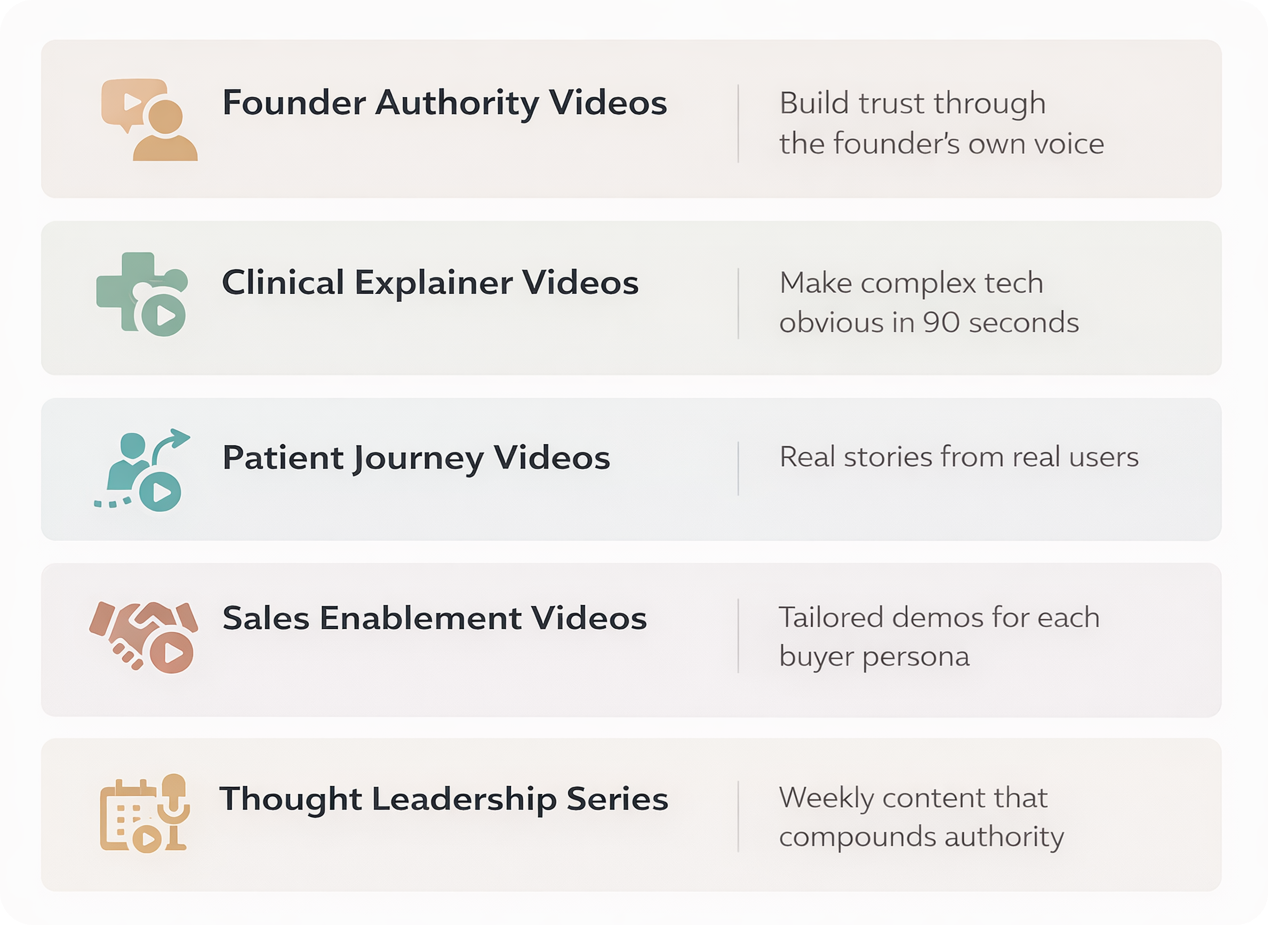
The five most effective healthcare startup video formats are founder authority videos, clinical explainers, patient journey stories, enterprise sales enablement, and thought leadership series.
1. Founder Authority Videos. Short-form clips where the founder explains the "why" behind the product. Think 60-second LinkedIn videos addressing a real clinical pain point. This is where founder-led video becomes a long-term growth engine.
2. Clinical Explainer Videos. Break down complex medical technology into visual stories. The goal is to make the value obvious in under 90 seconds, not to oversimplify the science.
3. Patient or User Journey Videos. Real people describing real outcomes. No actors, no scripts. This format is powerful when built as HIPAA-compliant video content under HHS guidelines.
4. Enterprise Sales Enablement Videos. Healthcare buying groups now include 5 or more stakeholders in 60% of organizations. Tailored demos for IT, clinical, and financial decision-makers close deals that generic walkthroughs lose.
5. Thought Leadership Series. Weekly short-form content covering regulatory changes and clinical trends. This builds compounding authority on LinkedIn, where health tech decision-makers spend their time.
How Do HIPAA and FDA Rules Affect Health Tech Video?
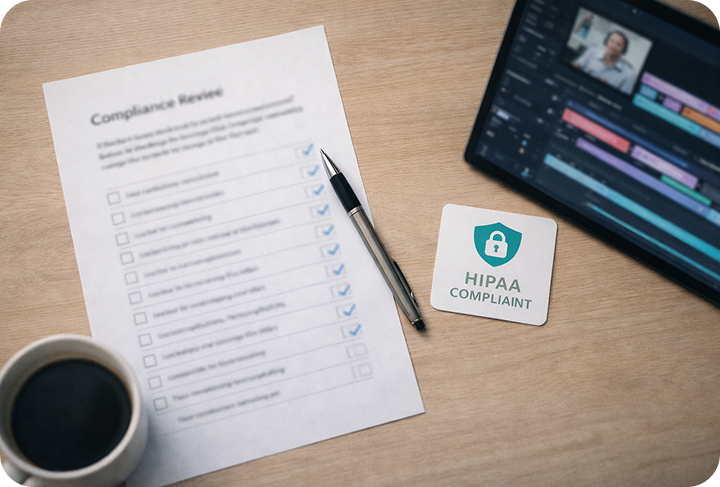
If your video includes patient information, testimonials, or clinical data, HIPAA rules apply. Protected Health Information extends to video footage, and standard release forms may not be sufficient.
If your product is a medical device, the FDA has specific guidelines on marketing claims. Phrases like "clinically proven" require randomized controlled trial evidence.
Build a compliance review step into your production workflow before you publish. Not after. This single habit prevents costly takedowns and protects the trust you have worked to build.
How Do You Turn 1 Video Into 8 Content Assets?
The strategy of repurposing long-form content into short-form video assets is what separates startups posting monthly from those dominating their niche.
One 10-minute founder interview becomes a full LinkedIn video, 3 to 4 short-form clips for Reels and TikTok, quote graphics, a blog post, an email excerpt, an audiogram, and a pitch deck insert. That is 8 assets from one session.
Building a 90-Day Health Tech Video Launch Plan
Most health tech founders want a video strategy but do not know where to actually start. The planning cycle stretches indefinitely because the scope feels overwhelming. This 90-day framework eliminates the ambiguity and gives you a clear sequence.
Days 1 to 30: Establish the trust foundation.
Your first month of video content should focus exclusively on founder authority. Film five to eight talking-head videos on your phone. Each video addresses one clinical pain point your buyer faces. No product pitches. No feature explanations. Just your perspective on a problem your buyers deal with every day.
Post two videos per week on LinkedIn. This gives the algorithm enough consistent signal to begin distributing your content to relevant audiences. Do not pause. Do not skip weeks. The consistency in the first 30 days is more important than the production quality.
Days 31 to 60: Add the proof layer.
In month two, begin introducing de-identified case study content and data visualization videos. These sit alongside your founder authority content and add the evidence layer that enterprise health buyers specifically require before engaging.
If you have a pilot partner or early customer willing to speak on camera, film a structured testimonial at the 60-day mark. Even one real customer voice, properly formatted under HIPAA guidelines, changes how enterprise prospects evaluate your brand.
Days 61 to 90: Introduce the repurposing system.
By month three, you should have enough raw footage to begin repurposing. Take your best-performing pieces, cut them into clips, and begin distributing to Instagram Reels and YouTube Shorts. This expands your surface area without adding filming time.
At the 90-day mark, review which video topics generated the most direct engagement, profile views, and connection requests. Those topics become your content pillars for the next quarter. You now have real audience data, not assumptions, driving your content decisions.
This is the difference between a video strategy that compounds and one that stalls. The 90-day structure forces commitment long enough to see meaningful signal.
When Should You Hire a Specialist Agency?

Most founders handle video in-house for the first 3 to 6 months. The signal to watch: if your output has dropped below two videos per week or quality is inconsistent, it is time to bring in specialists.
Not a generic video agency. A team that understands compliance, clinical language, and selling to healthcare buyers.
That is what we do at Alluvium. We produce done-for-you short-form video for health tech and wellness tech founders. Scripting, filming support, editing, distribution. Every piece is built for your audience and regulatory environment.
Ready to build a video strategy that converts? Let's talk.

Frequently Asked Questions