

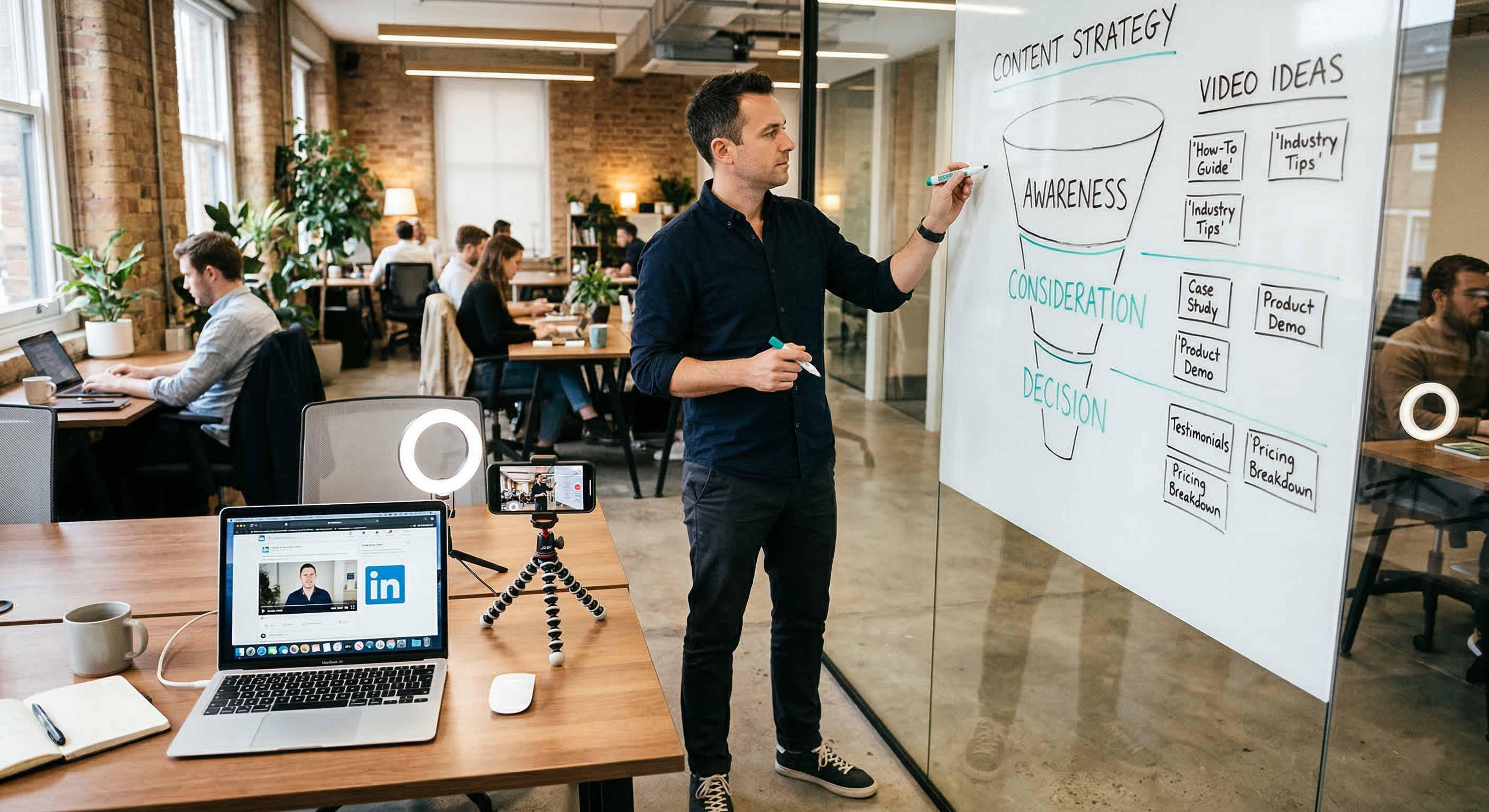
B2B Video Marketing Strategy for 2026: The Complete Guide for Founders
Most B2B founders know they should be using video. Very few have an actual strategy behind it.
A B2B video marketing strategy is a structured plan that matches specific video formats to each stage of the buyer's journey, then distributes that content where decision-makers spend time. In 2026, that means LinkedIn, YouTube, and short-form platforms. Not random content. Targeted video that moves prospects from awareness to closed deal.
This guide breaks down the exact formats, platforms, and steps that generate pipeline.
Why B2B Brands Need a Video Strategy in 2026
Video is no longer optional for B2B companies.
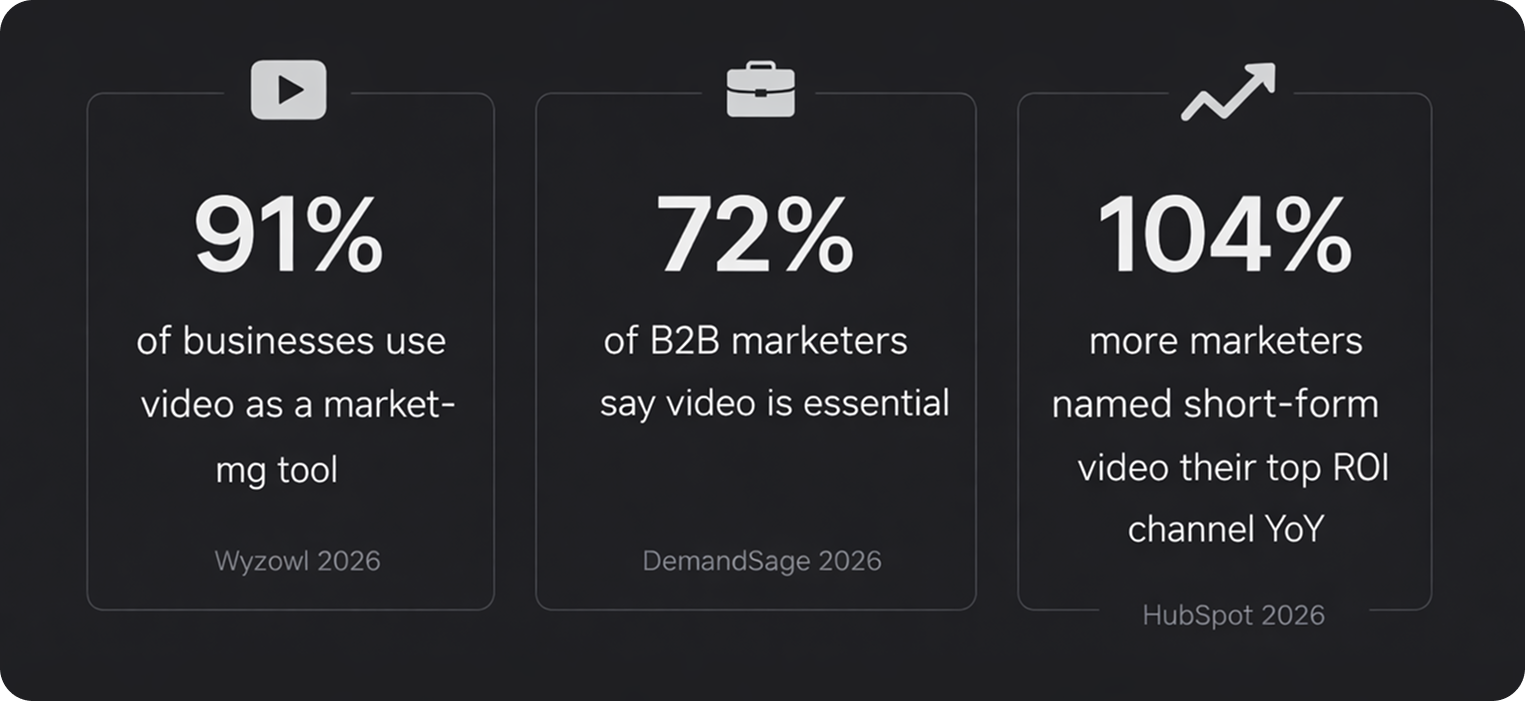
91% of businesses now use video as a core marketing tool, according to Wyzowl's 2026 report. Among B2B marketers specifically, 72% consider it essential (DemandSage, 2026). And 93% of B2B buyers say video content is an important factor when evaluating a vendor.
The bigger shift is where buyers find content. HubSpot's 2026 State of Marketing Report found 104% more marketers naming short-form video their highest-ROI channel year over year. Meanwhile, AI search platforms like ChatGPT and Perplexity are sending traffic with significantly higher purchase intent than traditional organic search.
Companies without a video strategy are not missing a trend. They are invisible to the modern B2B buyer.
What Are the 5 B2B Video Formats That Actually Drive Pipeline?
Not every video serves the same purpose. The most effective B2B strategies use a mix of formats mapped to the buyer journey.
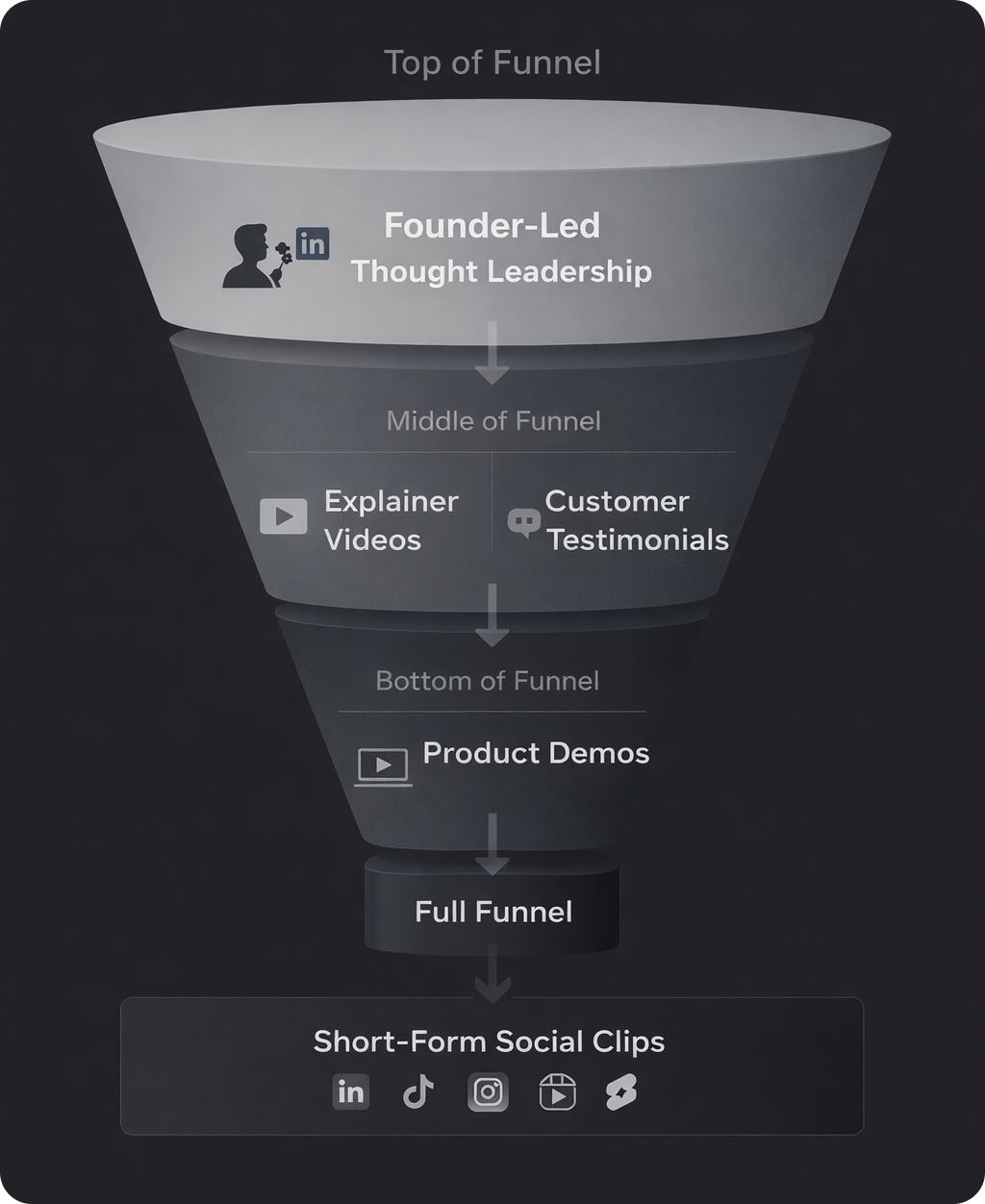
1. Founder-Led Thought Leadership (Top of Funnel):
Short clips sharing insight on real industry problems. LinkedIn's algorithm rewards native video, and founder-led content outperforms company page posts. In our experience working with health tech and climate tech founders, one authentic 60-second clip per week generates more inbound interest than a month of static posts.
2. Explainer Videos (Middle of Funnel):
60 to 90 second breakdowns of what your product does and why it matters. Average video length has dropped from 168 to 76 seconds since 2016, trending toward 39 seconds by 2026 (Siege Media). Get to the point.
3. Customer Testimonials (Middle to Bottom of Funnel):
Nothing closes trust gaps like a real customer explaining how you solved their problem. For regulated industries, these require careful compliance review, but the credibility payoff is enormous.
4. Product Demos (Bottom of Funnel):
Personalized walkthroughs addressing the objections your sales team hears weekly. Companies using video in sales report 49% faster revenue growth (Amra & Elma).
5. Short-Form Social Clips (Full Funnel):
Repurposed content from webinars and long-form video turned into 30 to 60 second vertical clips for LinkedIn, TikTok, Instagram Reels, and YouTube Shorts. This is where volume and consistency compound over time.
These five formats cover the ongoing cycle. Product launches are the one moment that sits outside it.
A launch video carries a first impression you only get once, which is the rare case where higher production value pays for itself. For AI startups needing high-quality launch videos, Flowjam has produced launch content for 25+ YC companies, averaging 100k+ views per video.
Used well, that video buys you a concentrated spike of attention. What happens next is a distribution problem.
Where Should B2B Companies Distribute Video in 2026?
Creating video is half the work. Distribution determines results.
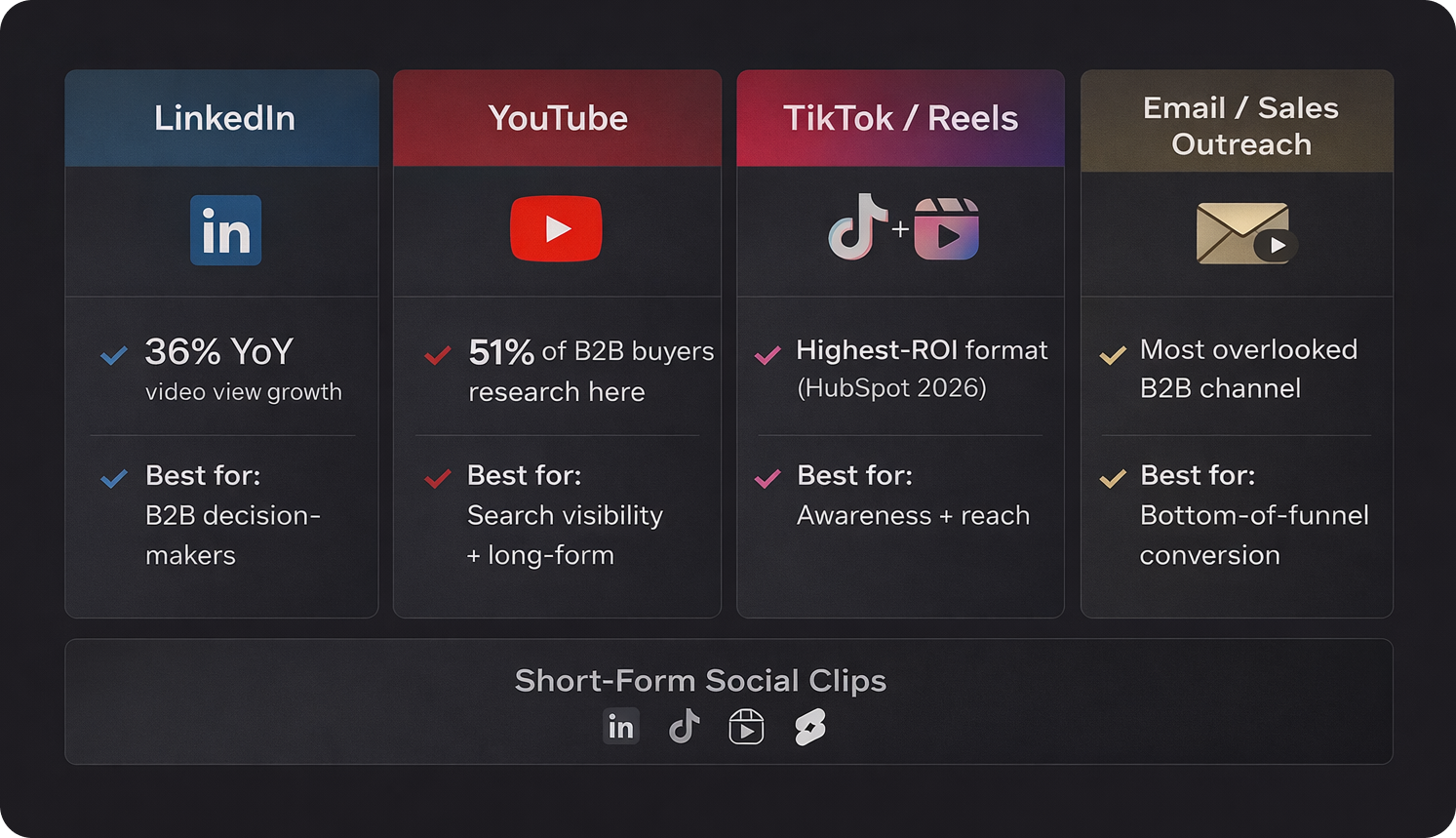
LinkedIn remains the dominant B2B video platform. Views increased 36% year over year. Post native uploads, not YouTube links, because the algorithm rewards on-platform content.
YouTube is the second-largest search engine. 51% of B2B buyers use it to research purchases (DemandSage). Optimize titles and descriptions for search intent.
Short-form platforms like TikTok and Instagram Reels are no longer consumer-only. B2B brands using short-form video strategically reach decision-makers during personal scrolling time.
Email and sales outreach is the channel most teams overlook. Embedding video thumbnails in prospecting emails lifts click-through rates substantially.
The Measurement Framework That Proves Video's Impact Internally
The strategy is only as durable as your ability to demonstrate that it is working. For most B2B founders, the internal pressure to justify marketing spend is real and ongoing. Having a simple measurement framework in place from day one removes that pressure and gives you a continuous mandate to keep going.
Track four numbers, nothing else.
First: pipeline-influenced deals. At the end of each month, ask your sales team how many of the active deals in the pipeline had at least one video touchpoint before the first conversation. Tag this in your CRM. Over 90 days, you will see a pattern that is difficult to argue with.
Second: inbound inquiry source. When someone books a call or fills out your contact form, ask one question: how did you find us? You will discover that a growing percentage of your best-fit leads found you through a video before they ever visited your website.
Third: sales call preparation rate. Track the percentage of qualified leads who arrive on discovery calls having already watched a piece of your video content. Founders who have been publishing consistently for 90 days consistently report that 30 to 50% of their inbound calls now arrive pre-educated. That means shorter cycles and higher close rates.
Fourth: cost per qualified lead from organic video versus paid channels. Once your video engine has been running for 90 days, compare what a video-sourced qualified lead actually cost you in time and production spend versus what a paid-sourced lead costs in ad budget. The comparison almost always resolves in favor of video.
How to Start Your B2B Video Strategy Without Overwhelm
You do not need a production studio. You need a repeatable plan.
Start with one founder-led video per week on LinkedIn. Use your phone. Speak to one pain point your buyers care about. Then repurpose that clip into two or three short-form assets for other platforms.
Once that rhythm is established, layer in explainers, testimonials, and demos. The companies growing revenue 49% faster through video are not doing everything at once. They are doing the right things consistently.
If you want a team that builds B2B video strategy for founders in health tech, wellness tech, and climate tech, that is what we do at Alluvium. We handle strategy, scripting, production, and repurposing so you can focus on building your company.

Frequently Asked Questions



.png)