How to Start Video Marketing as a Startup in 2026 (Without Wasting Budget)
Most startups know they need video. They just do not know where to start.
So they either overthink it, spend months planning, and never ship. Or they wing it, post a few clips, get no traction, and quit.
In 2026, video is the default way buyers research, compare, and decide. According to Wyzowl's 2024 State of Video Marketing report, 89% of consumers say watching a video has convinced them to buy a product or service. If you are not on video, you are invisible at the point of purchase.
This is the lean playbook to start without burning your runway.
What Does "Starting Video Marketing" Actually Mean for a Startup?
Starting video marketing as a startup means picking one goal, one format, and one platform, then filming consistently for 90 days before expanding. Most founders fail not because of bad content but because they try to do too much at once.
The core question before you film anything is: what is video supposed to do for you right now?
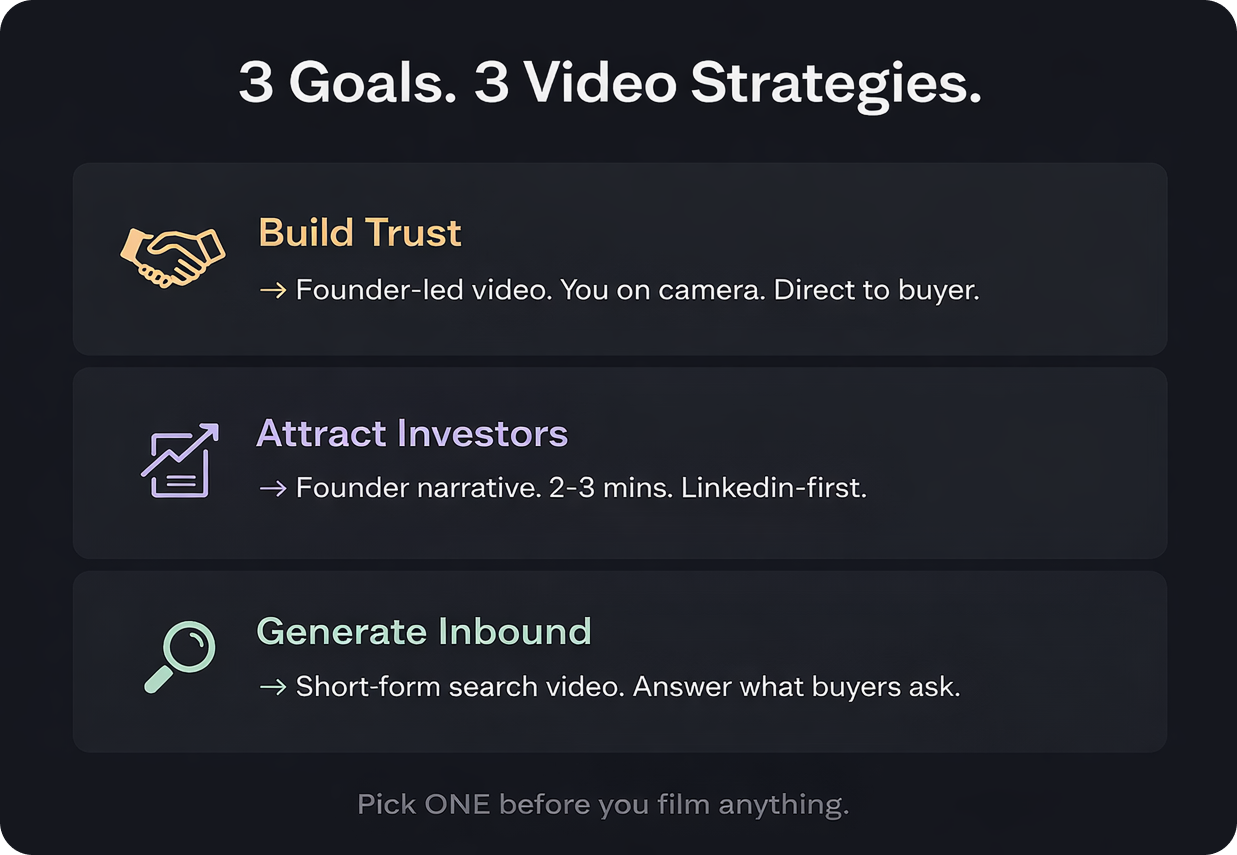
For early-stage startups, the answer is usually one of three things:
- Build trust with cold buyers who have never heard of you
- Attract investors or partners who need to see you think clearly
- Generate inbound from people actively searching for your solution
Pick one. Your format and platform decisions both flow from that answer.
Step 1: Match Your Format to Your Goal
Not all video formats serve the same purpose. Here is how to match them:
If your goal is trust:
You need founder-led content. You, on camera, speaking directly, explaining your thinking. Wyzowl's data shows that 96% of people have watched an explainer video to learn more about a product. This is the highest-converting format in B2B right now because people buy from people, not logos.
If your goal is inbound search:
You need short-form video built around the exact questions your buyers are already searching. A 30 to 60 second video answering a specific question your buyer has can generate compounding organic reach over months.
If your goal is investor credibility:
A 2 to 3 minute founder narrative, posted consistently on LinkedIn, positions you as a founder worth watching before any pitch deck lands.
The mistake most startups make is treating all three goals simultaneously. That produces average content for no one.
Step 2: Start With One Platform
Founders spread themselves thin by trying to be everywhere at once. That is how you produce mediocre content on five platforms instead of great content on one.
In 2026, the right platform depends entirely on where your buyer already is:
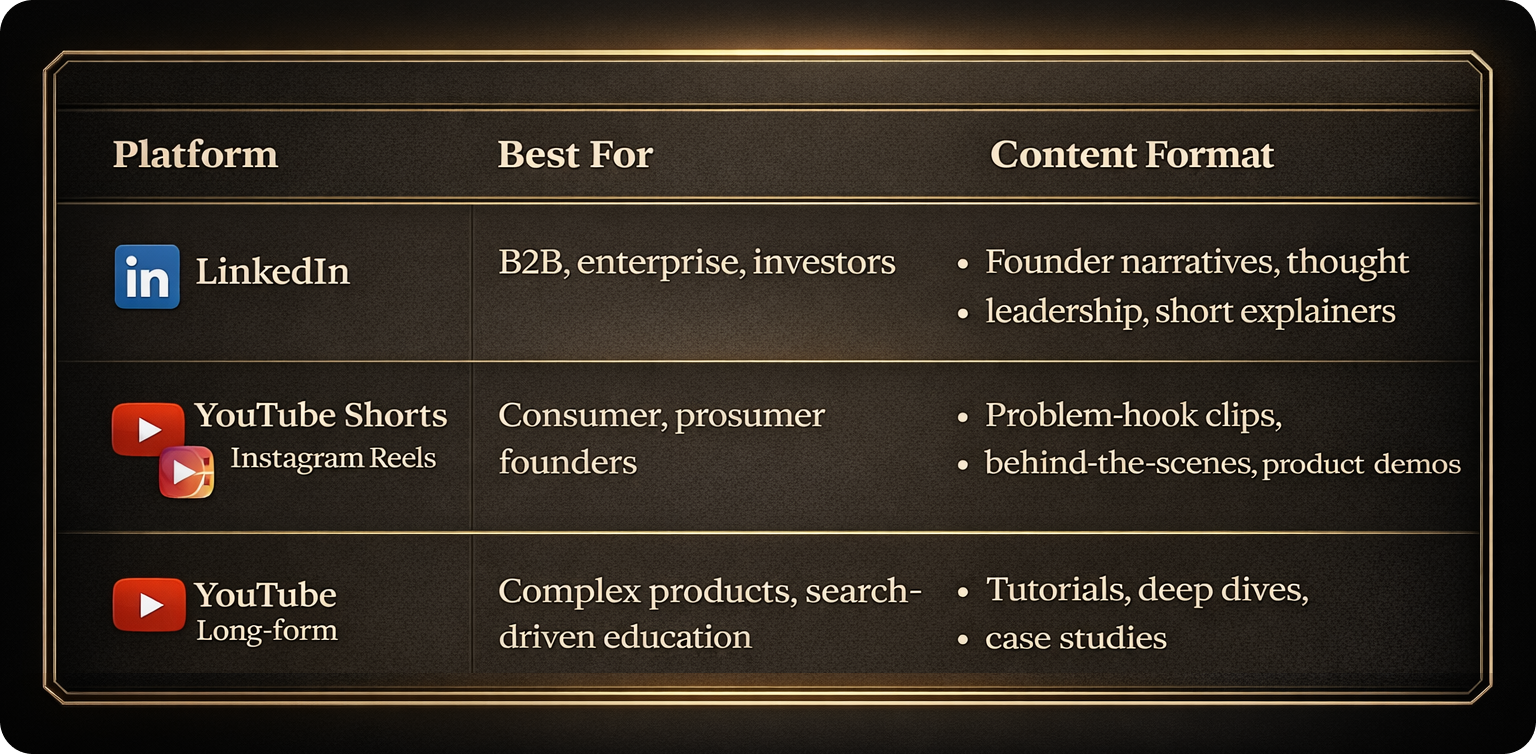
LinkedIn's native video currently receives 3x the reach of text posts, making it the highest-leverage starting point for most B2B founders. Short-form video specifically has become the dominant format for B2B startups because the barrier to entry is low and the distribution upside is high.
Pick one platform, commit for 90 days, then expand.
Step 3: Film Once, Distribute Everywhere
Here is the mistake most founders make: treating every video as a standalone production.
Flip the model. One 60-minute raw recording session can become 15 or more pieces of short-form content. That is a full month of content from a single afternoon.
You do not need a studio. A smartphone with a ring light and a quiet room produces content that performs. The edit is what makes content work, not the equipment.
Once you have raw footage, a repurposing system turns it into platform-specific clips, captions, quote cards, and more. We break down the exact process in our 1-to-15 content repurposing framework.
Step 4: The 3 Video Formats That Work Right Now
These three formats consistently outperform everything else for startups in 2026:
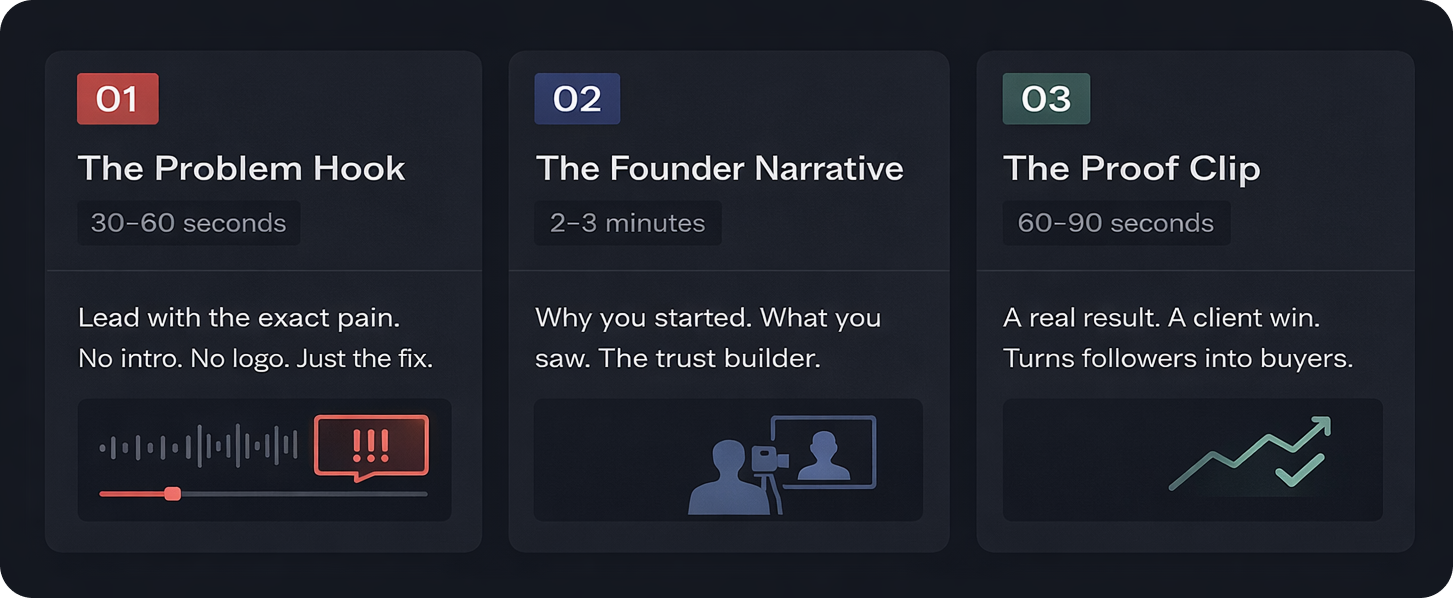
1. The Problem Hook (30 to 60 seconds)
Lead with the exact pain your buyer feels. No intro. No logo. Just: here is your problem, here is why it happens, here is the fix. Short, sharp, native to the feed.
2. The Founder Narrative (2 to 3 minutes)
Why did you start this? What did you see that others missed? This is the trust builder. It humanizes the brand and positions you as someone worth following before they ever visit your website.
3. The Proof Clip (60 to 90 seconds)
A real result. A client win, a metric, a before-and-after. This is what turns followers into buyers. Social proof in video format converts at significantly higher rates than written testimonials alone.
What the First 90 Days Should Actually Look Like
Most startup founders understand the strategy but still struggle with the execution because there is no clear picture of what the first few months should produce and look like.
Here is a concrete 90-day sequence.
In the first month, the only objective is to get on camera consistently. Film one video per week. Post it on your primary platform. Do not obsess over quality. Do not re-record until it is perfect. Ship it. The goal of month one is to eliminate the discomfort of recording, not to create your best content.
In the second month, the objective is to introduce basic structure. Apply the three-part hook, body, CTA framework to each video. Start paying attention to which topics generate more engagement than others. That signal, even from a small audience, tells you what your market cares about before you invest in better production.
In the third month, the objective is to begin repurposing. Take your three best-performing videos and cut each into two additional short-form clips. Distribute those clips to a second platform. You now have a multi-platform presence built from content you have already created.
By the end of 90 days, you will have posted 12 to 15 videos, gathered real engagement data, started building a repurposing habit, and developed enough comfort on camera to consider what comes next. That is the foundation of a content engine that can scale.
The Biggest Mistake Startup Founders Make With Video
The startups that win with video in 2026 are not the ones with the best equipment or the biggest budgets.
They are the ones who started before they were ready, refined as they went, and built a system to produce consistently.
Consistency beats quality at the early stage. Two solid videos per week for six months will outperform a single polished brand film every time. The algorithm rewards cadence. Your audience builds trust through repetition.
If you are serious about scaling your video presence, the question is not whether to start. It is whether you are building the right engine to sustain it.
At Alluvium Media, we help founders go from zero to 5 million views in 6 months. Book a call and we will show you exactly how.

Frequently Asked Questions